Liver Ultrasound Scan
Female Sonographers
Near MRT Stations
Same-Day Booking
One-Stop Clinic
Female Sonographers
Near MRT Stations
Same-Day Booking
One-Stop Clinic
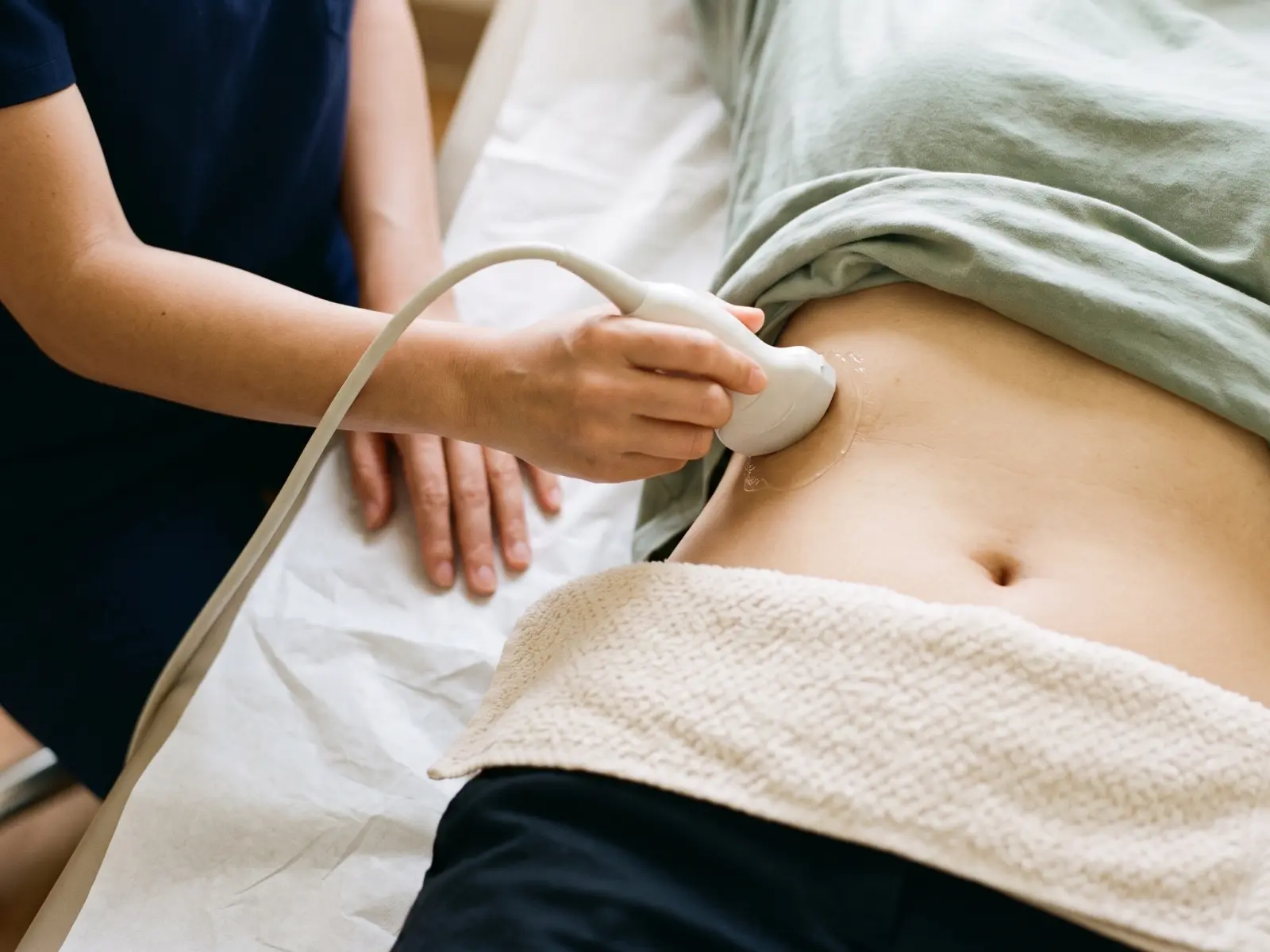
Sonographer in navy scrubs holding an ultrasound probe to a woman's upper belly

Check for Fatty Liver, Even Before Symptoms Appear

Scan at $196.20 NETT, with optional liver function blood tests from $30.52
No referral letter needed, with doctor consultations from $49.05
Report usually emailed within 72 hours, and our doctors will advise if further tests are needed

Conveniently located in Orchard, Tanjong Pagar, Jurong East & Novena

Dr Jana Lim, family physician at Singapore Women's Clinic

Medically Reviewed By: Dr Jana Lim, Board-Accredited Family Physician

Board-Accredited Family Physician | MBChB, MMed (FM)

MBChB, MMed (FM) | Last updated:
Found this page helpful?Helpful?
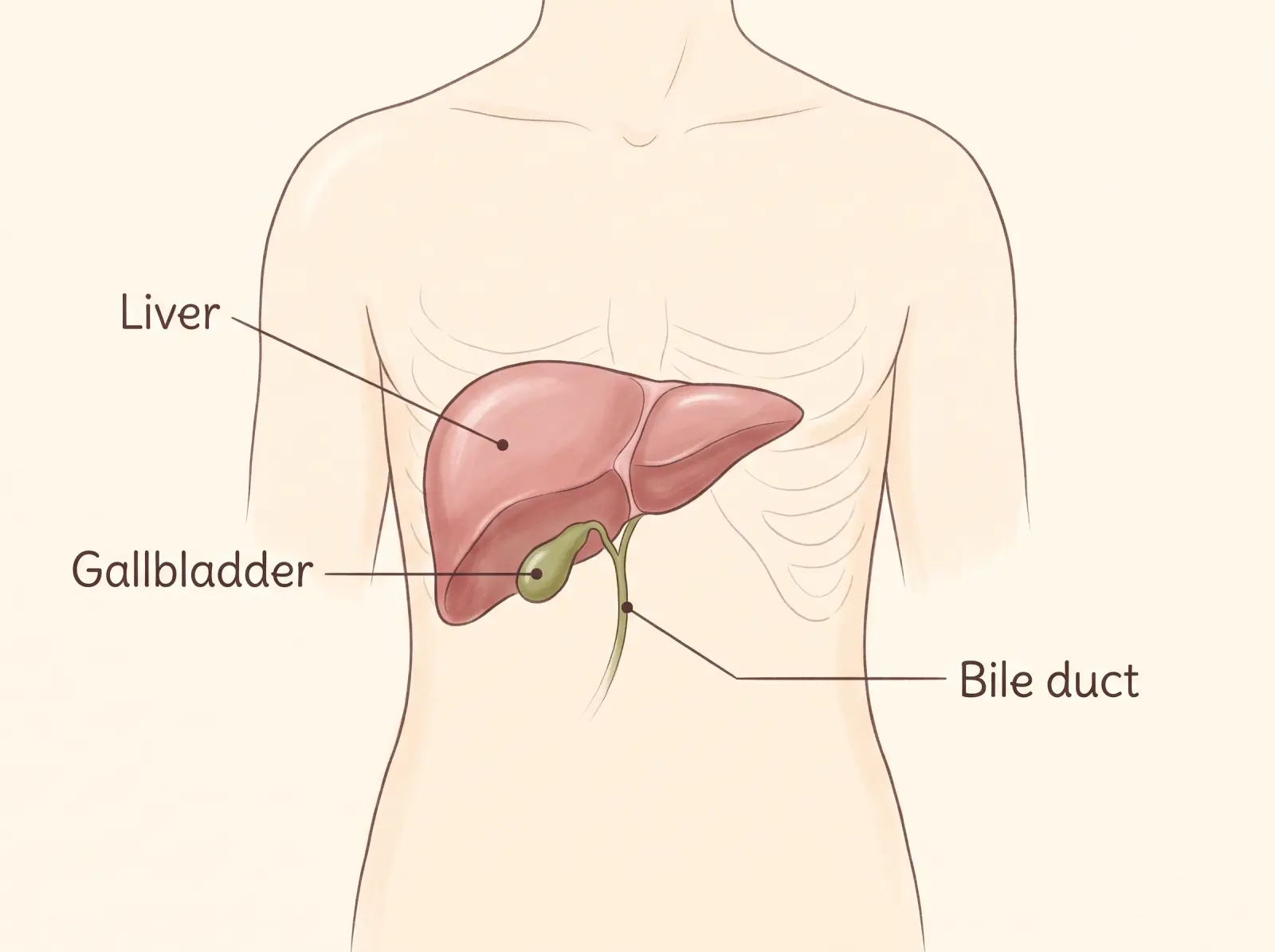
Labelled illustration of the liver with the gallbladder and bile duct beneath it

What Is a Liver Ultrasound?

A liver ultrasound is a non-invasive scan that uses sound waves to make live images of your liver. Unlike an X-ray or a computed tomography (CT) scan, it does not use radiation.

A liver ultrasound can also cover the rest of the hepatobiliary system (HBS), which includes the gallbladder and bile ducts (the tubes that drain bile out of the liver). This is also called a full HBS ultrasound.


What Is the Purpose of a Liver Ultrasound?

A liver ultrasound is done to look for signs of liver disease, such as fatty liver, which affects around 4 in 10 adults in Singapore.

Common reasons for a liver ultrasound include:

  • Investigating a possible liver problem – persistent pain in the upper abdomen, yellowing of the skin and eyes (jaundice), or raised liver enzymes on a blood test may point to a problem in the liver or bile ducts, and the scan can check for fat, swelling, scarring or a blockage
  • Health screening – a liver scan can be included in a routine health check-up, especially for people with risk factors for fatty liver, such as obesity, type 2 diabetes, high blood pressure or cholesterol, heavy alcohol use and polycystic ovary syndrome (PCOS)
  • Regular monitoring – repeat scans can show how a known liver condition is progressing, and people with chronic hepatitis B, or with cirrhosis (severe, permanent scarring of the liver) from hepatitis C or another cause, may be advised to have regular screening for liver cancer, which commonly includes a liver ultrasound

Concerned about your liver health? Our doctors can go through your health history and any blood test results, and advise whether an ultrasound is a suitable next step.

WhatsApp Us
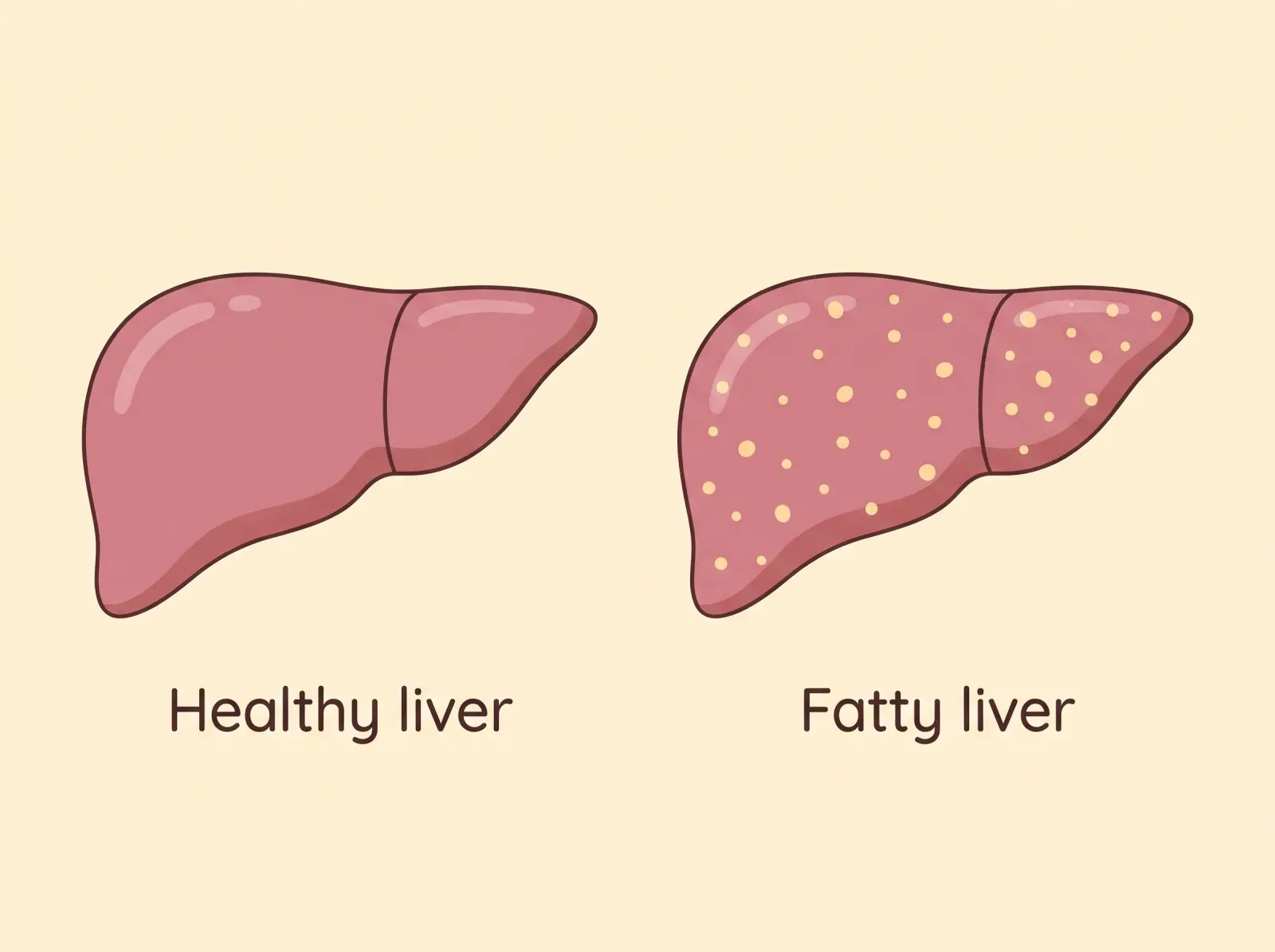
Illustration of a healthy liver beside a fatty liver dotted with fat droplets

What Can a Liver Ultrasound Detect?

A liver ultrasound can detect fatty liver, cirrhosis, lumps, cysts and abscesses, and gallstones or blocked bile ducts. It is commonly used as one of the first tests of liver health.

The images can also show changes in the size, surface and texture of the liver, such as an enlarged liver.

Like other ultrasound scans, it may not detect every abnormality, so blood tests or other scans may be recommended depending on the findings.

Liver function blood tests can be added to the scan to check how well the liver is working.

Fatty Liver

Fatty liver can usually be seen on a liver ultrasound, as excess fat stored in the liver makes it look brighter on the scan, although a mild case may be missed. Mild fatty liver usually causes no symptoms, so it is often first found during a routine health screening.

The scan shows the fat itself, but it does not measure liver stiffness, a sign of scarring. Stiffness is measured with a separate scan called liver elastography.

Cirrhosis and Scarring

Advanced cirrhosis often shows on a liver ultrasound as a lumpy (nodular) surface, a change in liver size and altered blood flow. In its early stages, cirrhosis may not show clearly on the scan.

Liver scarring (fibrosis) can develop after long-term damage from fatty liver disease, chronic hepatitis or heavy alcohol use, and advanced fibrosis may progress to cirrhosis.

Liver elastography can help estimate how much scarring there is.

Lumps, Cysts and Abscesses

A liver ultrasound can show abnormal areas inside the liver, which may include:

  • Lumps or growths – solid areas that may need further tests, such as a CT scan, a magnetic resonance imaging (MRI) scan or a biopsy (a small sample of liver tissue taken for testing), to find out what they are
  • Cysts – fluid-filled sacs, which are usually harmless
  • Abscesses – pockets of infection filled with pus

Gallstones and Blocked Bile Ducts

A liver ultrasound can also show gallstones (hardened deposits of bile) in the gallbladder. Gallstones may block the flow of bile and cause pain.

Bile ducts that look wider than normal (dilated) may point to a blockage, which can be caused by gallstones, a narrowing of the duct (stricture) or a tumour. The cause of the blockage may need to be confirmed with further tests.
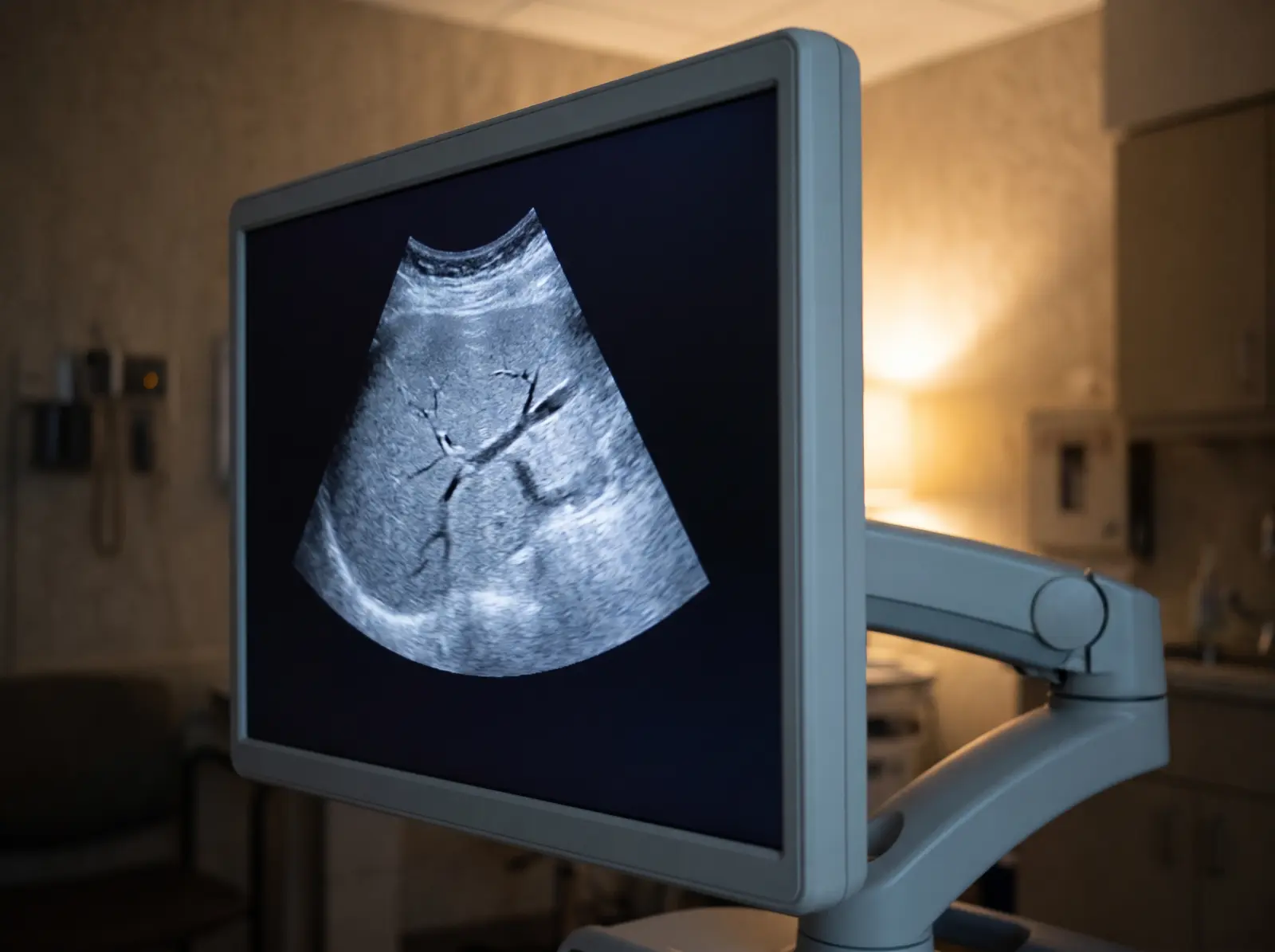

Ultrasound monitor showing a greyscale liver scan in a dim, warmly lit scan room

What Happens During a Liver Ultrasound Procedure?

A liver ultrasound procedure is generally painless and involves the following steps:

  1. Positioning – once you are lying on the examination bed, a water-based gel is applied to your abdomen to help the sound waves travel into the body
  2. Scanning – a transducer probe is moved across your abdomen while images of your liver appear live on a monitor. You may feel light pressure from the probe
  3. Afterwards – the gel is wiped off once the images are taken, and as no recovery time is needed, you can return to your normal activities straight away

How Long Does a Liver Ultrasound Take?

A liver ultrasound scan usually takes 30 to 45 minutes. With registration, preparation and any consultation, expect to spend about 1 to 1.5 hours at the clinic.

When Will I Get My Liver Ultrasound Results?

Liver ultrasound reports are usually emailed to you within 72 hours of the scan. If the scan finds anything that needs further tests, we will follow up with you about the next steps.


How Do I Prepare for a Liver Ultrasound?

You need to fast for at least 6 hours before a liver ultrasound, although you can drink plain water during this time. Eating makes the gallbladder empty and shrink, and can add gas to the bowel, which may stop the scan from getting clear images of your liver and gallbladder.

Please bring the following to your appointment:

  • Your identification card
  • A radiology order form (a written request for the scan), memo or referral letter, if you have one
  • Earlier scan reports and medical records, if you have any

Our clinic team will inform you of the preparation steps before your appointment.


Liver Ultrasound Cost in Singapore

At Singapore Women's Clinic, we provide liver ultrasounds, among other ultrasound scans, with optional liver function blood tests. Our prices are as follows:

Test Price*
Consultation From $49.05
Ultrasound Liver (Full HBS) $196.20
[Optional] Liver Function Test A - Total Bilirubin, Alkaline Phosphatase [ALP], ALT/SGPT, AST/SGOT, Gamma GT $30.52
[Optional] Liver Function Test B - Total Bilirubin, Alkaline Phosphatase [ALP], ALT/SGPT, AST/SGOT, Gamma GT, Total Protein, Albumin, Globulin, A/G Ratio $34.88
[Optional] Liver Function Test C - Total Bilirubin, Alkaline Phosphatase [ALP], ALT/SGPT, AST/SGOT, Gamma GT, Total Protein, Albumin, Globulin, A/G Ratio, LDH, Hepatitis Bs Antigen & Antibody, Hepatitis A Total IgG, Alpha Fetoprotein [AFP] $91.56

*All prices are NETT and inclusive of GST.

Payment Options We Accept

Visa Mastercard American Express UnionPay
Credit Cards
NETS / PayNow / GrabPay
Cash

If you do not have a referral letter or radiology order form for the scan, you will need a consultation with our doctor before the scan.

A range of ultrasound tests also forms part of our Crown Plus ($485), Royal ($667), Jewel ($1,415 male / $1,515 female) and Marvel ($2,000 male / $2,100 female) health screening packages.

Can I Use MediSave for a Liver Ultrasound?

You may be able to pay for a liver ultrasound with MediSave if it is done to investigate a medical concern, such as liver abnormalities, within the limits set by the Central Provident Fund (CPF). This applies to scans for yourself or your dependants.

Please contact our team for more information on your eligibility.


Why Choose Our Liver Ultrasound Services?

Scan & Blood Tests in One Visit

Your liver ultrasound and any liver function blood tests can be done in the same visit, so you do not need a separate appointment.

Quick Turnaround

Your report is emailed to you within 72 hours, with a follow-up if anything needs a closer look.

Same-Day Appointment

Your liver ultrasound can be booked for the same day, and our clinic team will help you find a suitable time.


Where to Get a Liver Ultrasound Near Me

Orchard Clinic

Singapore Women's Clinic at Camden Medical Centre in Orchard

Address

1 Orchard Boulevard, #05-09, Camden Medical Centre, S248649

Opening Hours

Mon - Fri: 8:30 AM – 12:30 PM, 1:30 PM – 5:30 PM

Sat: 8:30 AM – 12:30 PM

Sun & PH: Closed

Nearest MRT

Orchard Boulevard (TE13): 2-minute walk

Orchard (NS22): 8-minute walk

Parking

Camden Medical Centre Carpark

Tanjong Pagar Clinic

Singapore Women's Clinic at Anson House in Tanjong Pagar

Address

72 Anson Rd, #01-02, Anson House, S079911

Opening Hours

Mon - Fri: 8:30 AM – 12:30 PM, 1:30 PM – 5:30 PM

Sat: 8:30 AM – 12:30 PM

Sun & PH: Closed

Nearest MRT

Tanjong Pagar (EW15): 4-minute walk

Parking

Anson House Carpark

Jurong East Clinic

Singapore Women's Clinic at CPF Jurong Service Centre

Address

21 Jurong Gateway Rd, #02-08, CPF Jurong Service Centre, S608546

  • Enter at the Office Lobby by POSB, then take the lift to level 2

Opening Hours

Mon - Fri: 8:30 AM – 12:30 PM, 1:30 PM – 5:30 PM

Sat: 8:30 AM – 12:30 PM

Sun & PH: Closed

Nearest MRT

Jurong East (EW24 / NS1): Exit D (5-min walk)

Parking

Blk 132 Jurong Gateway Rd (Multi-storey Car Park)

Novena Clinic

Clinic entrance with the ATA Medical heart logo on frosted glass above the doors

Address

101 Irrawaddy Road, #09-01, Royal Square Medical Centre, S329565

Opening Hours

Mon - Fri: 8:30 AM – 12:30 PM, 1:30 PM – 5:30 PM

Sat: 8:30 AM – 12:30 PM

Sun & PH: Closed

Nearest MRT

Novena (NS20): 2-minute walk

Parking

Royal Square Medical Centre Carpark


Frequently Asked Questions

A liver ultrasound is commonly ordered after a blood test finds raised liver enzymes, to see whether a change in the liver itself, such as a build-up of fat or scarring, may explain the result.

No, you can book a liver ultrasound at our clinic without a referral letter. If another doctor has given you a memo, referral letter or radiology order form (a written request for the scan), bring it with you on the day. Without one, you will need a consultation with one of our doctors first, as the scan results need to be interpreted and followed up. At Singapore Women's Clinic, we offer consultations from $49.05.

Liver ultrasound scans are generally painless, with no needles or cuts involved. A handheld probe (transducer) is moved across a water-based gel spread over the abdomen, and mild pressure may be applied through the probe to get clearer images of the liver.

Having a liver ultrasound is not usually a cause for worry, as it is a low-risk, non-invasive scan that uses sound waves instead of radiation. Being sent for one does not by itself mean there is a problem with the liver. A liver ultrasound can also be included in a routine health check-up for people with no symptoms.

Yes, a liver ultrasound is generally accurate at showing fatty liver, lumps and cysts, although small amounts of fat and small lumps may not show. The clarity of the images also depends partly on preparation: fasting for at least 6 hours helps, as eating makes the gallbladder shrink and can add gas to the bowel, which may blur the images. Cirrhosis (severe, permanent scarring of the liver) may not show clearly in its early stages. Depending on the results, blood tests or other scans may be suggested.

Liver ultrasound frequency depends mainly on the risk of liver cancer, and people at higher risk are generally advised to have one every 6 months. People considered at higher risk include those with chronic hepatitis B and those with cirrhosis (severe, permanent scarring of the liver). Regular liver ultrasounds to screen for cancer are usually not needed for people without these risk factors. Repeat scans may also be used to monitor a known liver condition.

A full bladder is not needed for a liver ultrasound, as the scan looks at the liver, gallbladder and bile ducts (the tubes that drain bile from the liver) rather than the bladder. Instead, a liver ultrasound needs at least 6 hours of fasting beforehand, with plain water allowed. A full bladder is usually needed for some other scans, such as a pelvic ultrasound.

No, a liver ultrasound is not the same as a full abdominal ultrasound, although the two scans overlap. A liver ultrasound examines the liver, gallbladder and bile ducts (the tubes that drain bile from the liver). A full abdominal ultrasound looks at these as well as the pancreas, spleen and kidneys, so it may be chosen for unexplained abdominal pain or to check all of these organs in one scan.

FibroScan and a liver ultrasound are different tests that look at different features of the liver. A liver ultrasound uses sound waves to make images of the liver, showing changes such as fat, lumps and cysts. A FibroScan is a type of liver elastography. Its handheld probe passes painless vibrations through the liver to estimate how stiff it is. A stiffer liver may point to scarring (fibrosis), and a standard liver ultrasound does not measure stiffness.

A liver ultrasound may show changes linked to hepatitis (inflammation of the liver), such as a swollen liver, but it usually cannot confirm hepatitis or show what is causing it. Hepatitis B, for example, is diagnosed through specific blood tests that check for the infection. Long-term hepatitis can lead to scarring of the liver, and advanced scarring (cirrhosis) often shows on the scan.

Liver cancer usually cannot be confirmed with a liver ultrasound alone, although the scan can show a lump or growth in the liver. Fluid-filled cysts are usually harmless, while a solid lump may need further tests, such as a computed tomography (CT) or magnetic resonance imaging (MRI) scan, or a biopsy (a small sample of liver tissue taken for testing). In people at higher risk of liver cancer, the scan is often paired with an alpha-fetoprotein (AFP) blood test, which measures a protein that can rise with liver cancer.

Fatty liver is commonly graded on an ultrasound as mild, moderate or severe, by how bright the liver looks compared with the kidney and how clearly its blood vessels show. More fat tends to make the liver look brighter and may blur these vessels and the deeper parts of the image. A grade describes how much fat is seen, not how much inflammation or scarring the liver has. Grading also relies partly on the judgement of the person reading the scan, and mild fatty liver can be missed.

Yes, a liver ultrasound may look normal even when liver enzymes are high, as the two tests check different things. Raised liver enzymes, such as alanine aminotransferase (ALT), show that liver cells may be inflamed or injured, while an ultrasound shows the liver's structure. It is best to discuss with a doctor whether further tests, such as liver elastography to check for scarring, are needed, based on your enzyme levels and risk factors.

Results of a liver ultrasound are not usually given at the end of the scan, as a written report is prepared afterwards. At Singapore Women's Clinic, we email the report, usually within 72 hours.

The next step after a liver ultrasound depends on what the report shows, along with any symptoms and blood test results. Further tests, if needed, may include liver blood tests, liver elastography to check for scarring, or a computed tomography (CT) or magnetic resonance imaging (MRI) scan to look more closely at a lump. It is advisable to discuss with a doctor which of these tests suit you.

How Do I Book a Liver Ultrasound Appointment?