Medically Supervised Weight Loss in Singapore
Dr Leonard Leng on achieving sustainable weight loss
Your Health, Your Goals, Your Journey
Conveniently located in Orchard, Tanjong Pagar, Jurong East & Novena

Medically Reviewed By: Dr Jana Lim, Board-Accredited Family Physician
Board-Accredited Family Physician | MBChB, MMed (FM)
MBChB, MMed (FM) | Last updated:
Losing weight is about more than the number on the scale. It also means improving your overall health and quality of life. At Singapore Women's Clinic, we support your weight loss with medical guidance and practical tools suited to you.
Rather than relying on medication alone, we focus on sustainable habits, including balanced nutrition, regular physical activity, and care tailored to your needs.
By addressing both your lifestyle and any underlying health concerns, we aim to lower your risk of chronic disease, restore your energy, and support lasting well-being built around your goals.

Obesity in Singapore
Almost 4 in 10 adults in Singapore are now above the healthy weight range, making obesity a growing concern. More screen time, less physical activity and diets high in calorie-dense foods are among the everyday habits behind this rise.
Weight is now the fastest-rising heart risk in Singapore. Heart attacks among people who are overweight or obese are projected to be almost 10 times as common by 2050, a far steeper rise than for high blood pressure (3.5 times), type 2 diabetes (3.2 times), high cholesterol (3.1 times) or smoking (2.6 times). Heart attack deaths linked to those other risks are expected to fall over the same period, but not those linked to weight.
Obesity and its related health risks also add to medical costs and the need for long-term care, so managing your weight early can protect both your health and your finances for years to come.
What Are the Effects of Obesity on Health?
Obesity impacts both physical and emotional well-being. Beyond appearance, it also increases the risk of developing several medical conditions:
- Metabolic health — Strongly linked to insulin resistance and type 2 diabetes
- Heart and circulation — Raises the risk of hypertension, high cholesterol, and cardiovascular disease, which are leading causes of morbidity and mortality
- Joints and mobility — Extra weight puts strain on the knees, hips, and spine, often leading to osteoarthritis and persistent pain, especially with age
- Sleep and breathing — Frequently associated with obstructive sleep apnoea and interrupted breathing at night
- Psycho-emotional health — May lead to low self-confidence, social difficulties, anxiety, and depression, impacting quality of life and relationships
- Cancer risk — Increases the risk of several cancers, such as breast, colon, and liver cancer, usually developing over the longer term

What Causes Weight Gain and Obesity?
Gaining excess weight is usually the result of several contributing factors working together rather
than one single cause.
Fundamentally, obesity occurs when the body takes in more calories than
it can burn for energy, leading to the storage of the extra calories as fat. Common causes include:
- Dietary habits — Frequent intake of high-calorie or processed foods and sugary drinks
- Physical inactivity — Sedentary lifestyles, work that involves prolonged sitting, and extended screen use reduce the number of calories the body burns each day
- Age-related changes — Metabolism slows with age, while muscle mass declines, making weight gain more likely
- Genetic predisposition — Inherited traits such as slower metabolism or differences in appetite control can increase susceptibility
- Hormonal changes — Conditions such as hypothyroidism or polycystic ovary syndrome (PCOS) can alter metabolism and weight regulation, and the hormone shifts of menopause often lead to weight settling around the belly
- Medical conditions and medications — Certain illnesses and drugs, such as corticosteroids and antidepressants, may promote weight gain as a side effect
When Should You Seek Medical Help for Weight Loss?
You should consider a medically supervised approach if excess weight is affecting your health or if self-directed efforts have not been successful. This may include:
- Obesity-related conditions — Conditions such as high blood pressure, diabetes, or raised cholesterol, where weight management can help reduce complications
- Concerning signs — Breathlessness, fatigue, or joint pain linked to excess weight that may require medical evaluation
- Hormonal or medical causes — Underlying issues such as hypothyroidism or PCOS can make weight loss more challenging and may need targeted treatment. A hormone blood test can help identify them
- Limited effect of lifestyle adjustments — When diet and exercise alone have not worked, medication or structured programmes can provide additional support
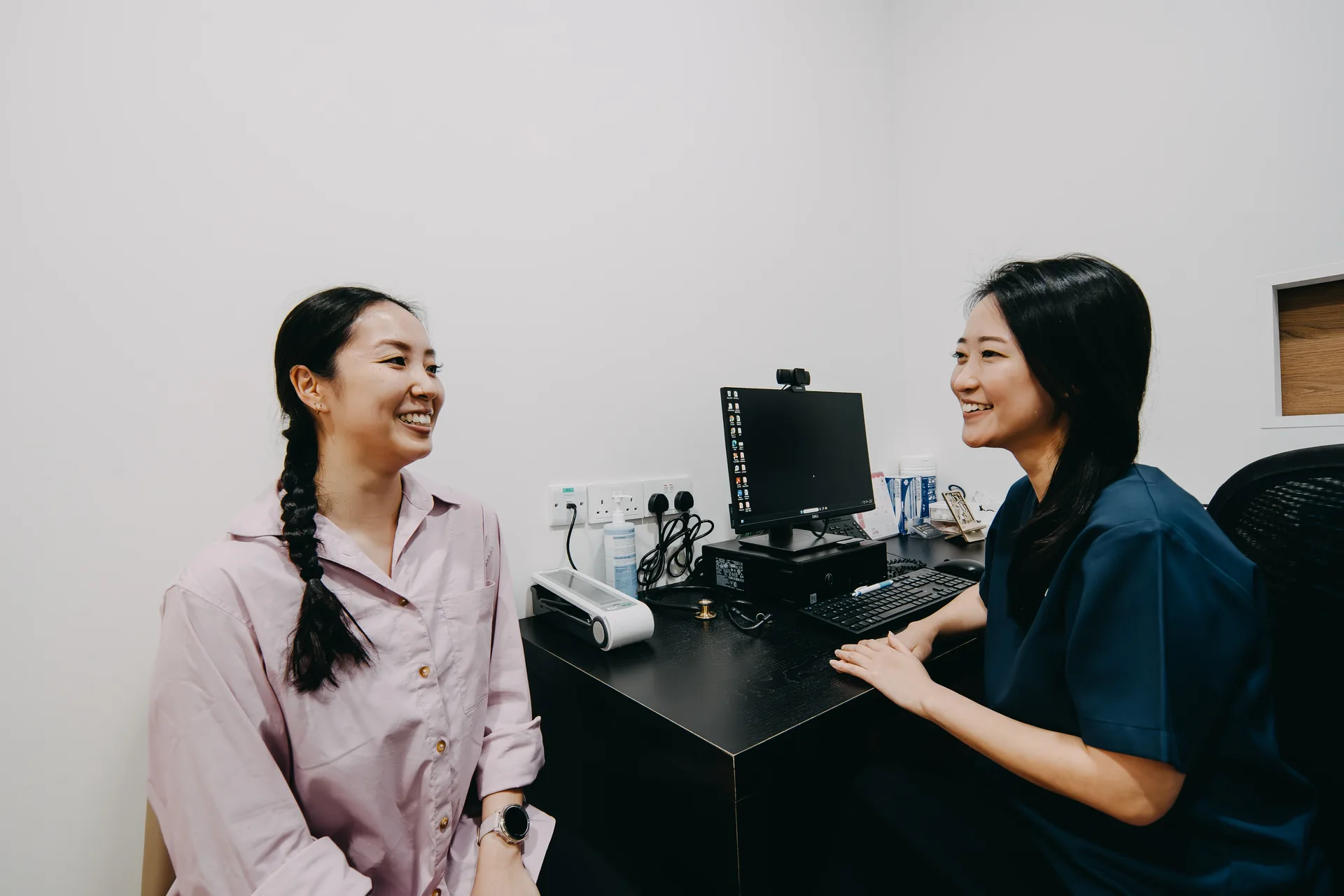
"Weight management is not just about numbers. It's about understanding your lifestyle, health history, and goals, and creating a plan that fits realistically into your daily life."
Dr Jana Lim
What Are Some Medical Weight Loss Options?
Medical weight loss programmes usually combine lifestyle guidance, prescription treatments, and in some cases, surgery. These approaches are typically used together as part of a holistic plan that addresses different aspects of health to support long-term weight management.
| Weight Loss Option | Description |
|---|---|
| Lifestyle modification |
|
| Prescription medications (oral) |
|
| Weight loss injections |
|
| Bariatric surgery |
|
GLP-1 agonist medications may be considered for adults aged 21 and above with obesity (BMI ≥ 30) or overweight (BMI ≥ 27) with at least one weight-related condition, such as high blood pressure, type 2 diabetes, or sleep apnoea.
What to Expect from Our Weight Loss Programme
Complimentary InBody Scans
At Singapore Women's Clinic, InBody body composition scans are included for all weight loss patients. For in-clinic follow-ups they are done during your visit, while telemedicine patients can book the scans on their own with no additional consultation needed.
Why Body Composition Tracking Matters in Weight Loss
When you lose weight, you can also lose muscle along with fat. Losing too much muscle slows your
metabolism and makes the weight harder to keep off. To stay ahead of this, we recommend an
in-clinic InBody scan every 3 to 6 months for patients on our weight loss programme.
The InBody scan uses bioelectrical impedance analysis (BIA) to measure your body fat percentage, skeletal
muscle mass, and visceral fat in under a minute. The readings tell us whether the loss is fat or muscle,
so adjustments to your medication, diet, and resistance training can be made before progress stalls.
Body weight is also shaped by genetics, gut microbiota, hormones, and sleep. Your
doctor reviews these alongside your InBody results so your treatment reflects your full health picture,
not just what is on the scale.


Cost of Weight Loss Treatments
At Singapore Women's Clinic, our weight loss services are priced as follows:
| Treatment | Price* |
|---|---|
| Consultation | From $49.05 |
| Appetite Suppressants | From $200 |
| Weight Loss Injections | From $422.92 / box** |
*Prices are NETT and inclusive of GST.
**One box contains 3 vials and each vial can last 6 days at maximum dose.
Why Choose Our Weight Loss Programme
Holistic Approach
We believe in a combined approach using nutrition, exercise, lifestyle changes, and medication when needed for lasting results.
Certified in Obesity Management
Our doctors are POMS- and BOMA-trained to support you at every step of your weight loss journey.
In-Clinic or Telemedicine Follow-Ups
Choose the flexibility of in-clinic or telemedicine follow-ups, with medication sent straight to your home.
Complimentary InBody Scans
Free body composition tracking for all weight loss patients so you can see fat loss alongside muscle preservation.