Rabies Vaccine Singapore

Be Prepared Before Close Contact With Animals
Conveniently located in Orchard, Tanjong Pagar, Jurong East & Novena

Medically Reviewed By: Dr Jana Lim, Board-Accredited Family Physician
Board-Accredited Family Physician | MBChB, MMed (FM)
MBChB, MMed (FM) | Last updated:

What Is Rabies?
Rabies is a viral infection that attacks the central nervous system (the brain and spinal cord) in mammals, including humans. The virus travels along the nerves to the brain, where it causes inflammation and damage.
Rabies is almost always fatal once symptoms appear, but vaccination can prevent it, either as a precaution before any possible exposure or promptly after a suspected one.

How Does Rabies Spread?
The rabies virus is most commonly transmitted through the saliva of infected animals via
bites or scratches. In some cases, exposure may also occur if contaminated saliva
contacts mucous membranes or open wounds.
Individuals travelling to areas where rabies is endemic should avoid close contact with unfamiliar
animals and consider consulting a doctor about vaccination options.
Rabies Symptoms
Rabies progresses through three distinct clinical stages: prodromal, furious and paralytic. The incubation period varies widely, typically lasting between 1 to 3 months, although it may range from just a few days to over a year.
-
Prodromal Stage (2–10 days) – Early signs often mimic flu-like symptoms, including:
- Fever and weakness
- Headaches
- Nausea and vomiting
- Tingling or discomfort around the bite site
-
Furious Rabies (2–7 days) – This form affects 70–80% of symptomatic cases and may
involve:
- Severe agitation and restlessness
- Anxiety and confusion
- Hallucinations
- Difficulty swallowing, sometimes accompanied by hydrophobia (fear of water)
- Seizures
-
Paralytic Rabies (2–7 days) – In 20–30% of cases, symptoms progress more quietly with:
- Gradual onset of muscle weakness
- Paralysis starting from the wound area and extending to other parts of the body
- Reduced reflexes
- Eventual coma
Once symptoms emerge, rabies is almost always fatal, highlighting the urgency of early medical intervention and post-exposure vaccination.

Who Is the Rabies Vaccine Recommended for?
Pre-exposure Prophylaxis (PrEP)
- Individuals at elevated risk, such as veterinarians, laboratory personnel, and those working closely with animals.
- Travellers heading to areas where rabies is common, particularly those engaging in outdoor activities like trekking or camping.
Post-exposure Prophylaxis (PEP)
- Anyone who is bitten, scratched, or has close contact with an animal suspected of carrying rabies should receive immediate medical attention and vaccination.
- Individuals previously vaccinated may still require follow-up doses to ensure continued protection.
How Does the Rabies Vaccine Work?
The rabies vaccine stimulates the immune system to produce antibodies that can neutralise the rabies
virus. These antibodies help prevent the virus from reaching the brain, which is essential
since rabies becomes life-threatening once neurological symptoms develop.
In post-exposure scenarios, the vaccine is often administered alongside rabies immune globulin (RIG) to provide both
immediate and long-term defence.
Rabies Vaccine Route of Administration
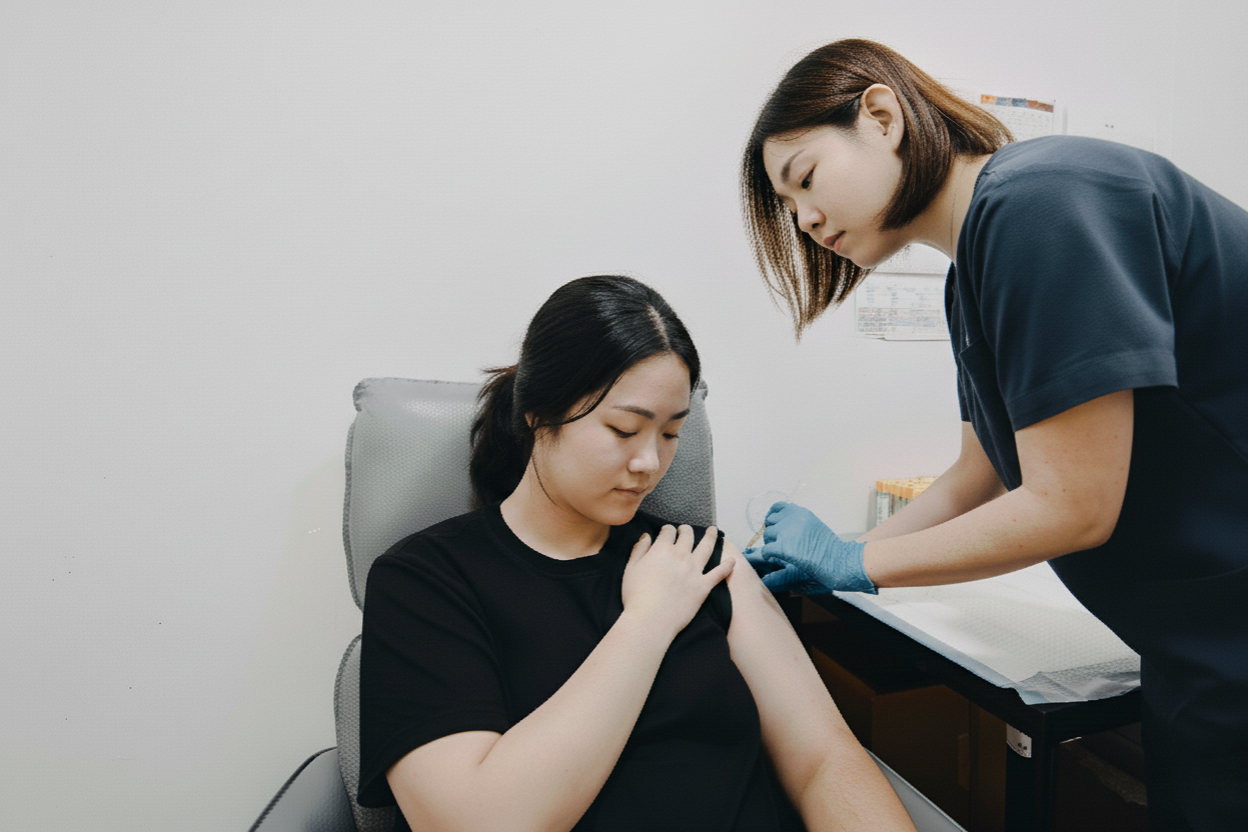
The rabies vaccine is usually given through an intramuscular injection, typically administered in the upper arm (deltoid region) for adults or the thigh for children.

Rabies Vaccine Dose & Schedule
The dosage and schedule of the rabies vaccine depend on whether it is administered as a preventive measure or in response to exposure.
| Vaccination Type | Dose & Schedule |
|---|---|
| Pre-exposure (Unvaccinated) | 3 doses on Days 0, 7, and 28 |
| Post-exposure (Vaccinated) | 2 doses on Days 0 and 3 |
| Post-exposure (Unvaccinated) | 4 doses on Days 0, 3, 7, and 14 + RIG on Day 0 |
A rapid schedule may be used for individuals needing urgent pre-exposure protection.
Note that rabies immune globulin (RIG) is essential in post-exposure cases for unvaccinated individuals, and
our clinic does not currently offer this. Patients are advised to go to the nearest A&E department
for RIG administration.
How Long Does the Rabies Vaccine Last?
For general protection, a booster dose is suggested one year after the initial series for
those revisiting high-risk areas. Professionals with continuous risk, such as animal
handlers, may require repeat boosters every 6 months to 2 years, depending on antibody levels.
Always consult your healthcare provider to determine an appropriate booster schedule.
Rabies Vaccine Side Effects
Most people tolerate the rabies vaccine well, though some may experience temporary side effects such as:
- Pain, redness, or swelling at the injection site
- Dizziness
- Mild headaches
These symptoms are generally short-lived, but seek medical advice if they persist or worsen.
Rare But Serious Reactions to Watch For
Although uncommon, some individuals may experience severe allergic responses. Symptoms to look out for include:
- Swelling of the face or eyes
- Difficulty breathing
- Generalised itchy rash
Seek immediate medical attention if any of these signs occur after vaccination.
Disclaimer: This overview does not cover all possible side effects or medical considerations. Always consult a qualified healthcare professional for medical advice before receiving any vaccination.
Rabies Vaccine Cost in Singapore
At Singapore Women's Clinic, we offer the rabies vaccine (Rabipur), with prices as follows:
| Vaccine | Price* |
|---|---|
| Rabies (Rabipur) Vaccine | $263.78 / dose |
| Travel Medicines | |
| Malaria Pills (Doxycycline / Malarone) | From $1.09 / tab |
| Period Delay Pill (Norethisterone 5 mg) | $0.76 / tab |
*Prices are NETT and inclusive of GST.
Payment Options We Accept


Why Choose Our Vaccination Services?
Same-Day Appointments
Book in the morning and have your vaccination the same day, at any of our clinics.
One-Stop Clinic
Get several vaccines in one visit, so you are not making a separate trip for each one.
Proof of Vaccination
Receive official documentation at no extra cost, for travel, school or work.