Mammogram services at our Tanjong Pagar (Anson) clinic will be unavailable till further notice. We apologise for the inconvenience caused.

MRI Scan in Singapore

MOH-Registered
Near MRT Stations
Same-Day Booking
MediSave Claimable
MOH-Registered
Near MRT Stations
Same-Day Booking
MediSave Claimable
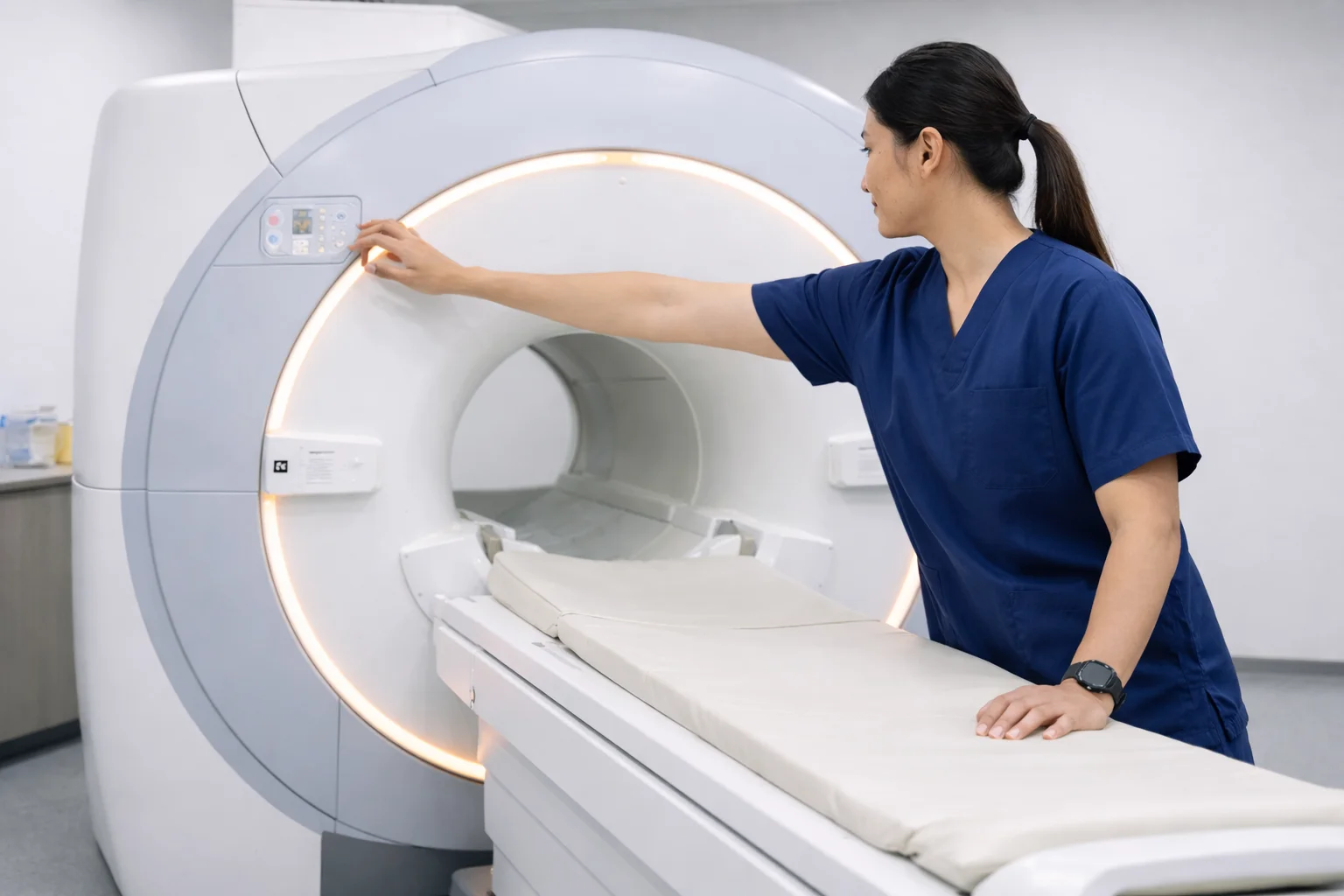
Radiographer preparing an MRI scanner for a patient's diagnostic imaging scan

Detailed Scans, Clearer Answers

Wide range of MRI scans for brain, spine, joints, abdomen and moreWide range of MRI scans for brain, spine, joints, abdomen and more
From $1,090 with transparent NETT pricing and no hidden feesFrom $1,090 with transparent NETT pricing and no hidden fees
MediSave claimable for eligible diagnostic MRI scans (up to $600 per year)MediSave claimable for eligible diagnostic MRI scans (up to $600 per year)
Consultation and imaging in one visit with no need for multiple appointmentsConsultation and imaging in one visit with no need for multiple appointments
Book Your MRI Appointment

Conveniently located in Orchard, Tanjong Pagar and Jurong East |
View our MRI scan prices

Book Your MRI Appointment

Conveniently located in Orchard, Tanjong Pagar and Jurong East |
View our MRI scan prices

Medically Reviewed By: Dr Jana Lim | MBChB, MMed | Board-Accredited Family Physician

MBChB, MMed | Board-Accredited Family Physician

Last updated: Mar 07, 2026

What Is an MRI Scan?

An MRI (magnetic resonance imaging) scan is a non-invasive diagnostic imaging method that uses strong magnetic fields and radio waves to produce detailed images of the inside of the body.

Unlike X-rays and CT scans, MRI does not use ionising radiation. Like ultrasound, it is a radiation-free imaging method, making it a commonly chosen option for imaging soft tissues, organs, and joints.

MRI scans can capture images of structures that other imaging methods may not show as clearly, including the brain, spinal cord, muscles, ligaments, and internal organs. They are widely used to investigate a range of conditions, from joint injuries and back pain to neurological concerns and abdominal abnormalities.

How Does an MRI Scan Work?

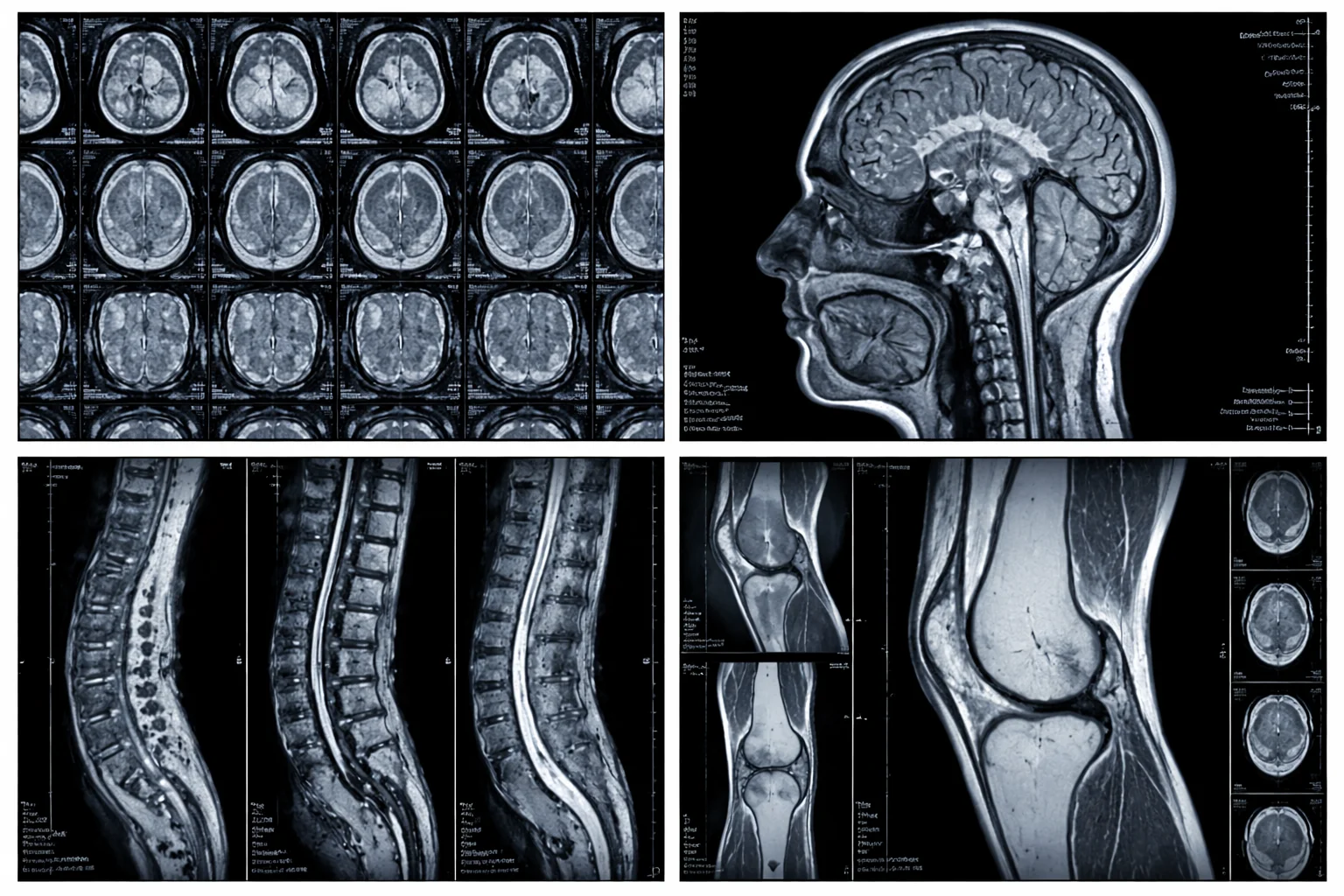
MRI scan results showing cross-sectional images of the brain, spine, and knee

An MRI scanner works by creating a strong magnetic field around the body, which temporarily aligns the hydrogen atoms in your tissues.

Short bursts of radio waves are then directed at the body, briefly disrupting this alignment. As the atoms return to their normal position, they emit signals that are picked up by receivers in the scanner. A computer processes these signals and converts them into detailed cross-sectional images.

Because different types of tissue produce different signals, MRI can distinguish between structures such as muscle, cartilage, nerves, and fluid. In some cases, a contrast dye is injected into a vein before the scan to make certain tissues or blood vessels easier to see.

As MRI does not use any ionising radiation, it can be repeated as needed without radiation exposure.

Common Types of MRI Scans

MRI scans can cover virtually any part of the body, from the brain to the knees, with the type of scan depending on the condition being investigated.

Scan Description & Purpose
Brain MRI Examines the brain and surrounding structures to assess:
  • Headaches, dizziness, or seizures
  • Memory changes or cognitive concerns
  • Suspected tumours or stroke
Stroke Screen
(includes MRA, COW & Carotids)
Images the brain's blood vessels (Circle of Willis) and carotid arteries to assess:
  • Stroke risk or investigation of stroke-like symptoms
  • Sudden weakness, speech difficulties, or vision changes
  • Narrowing or blockages in the arteries supplying the brain
Neck / Nasopharynx MRI Examines the soft tissues of the neck, throat, and nasal passages to assess:
  • Lumps, swelling, or masses in the neck region
  • Nasopharyngeal abnormalities
  • Investigation of persistent symptoms in the head and neck area
Shoulder MRI Examines the rotator cuff, labrum, and surrounding soft tissues to assess:
  • Shoulder pain or instability
  • Suspected rotator cuff or labral tears
  • Frozen shoulder or impingement
Spine MRI
(Cervical, Thoracic, Lumbar)
Produces images of the spinal cord, vertebrae, and surrounding nerves to investigate:
  • Back or neck pain
  • Disc herniation or spinal stenosis
  • Nerve compression or spinal cord abnormalities
Abdomen MRI
(Kidney, Liver, Pancreas, Gallbladder & Spleen)
Produces images of the abdominal organs to investigate:
  • Abdominal pain or masses
  • Abnormal blood test results
  • Liver, kidney, or pancreatic conditions
Pelvis MRI Examines the pelvic organs, including the uterus, ovaries, bladder, and surrounding structures to assess:
  • Pelvic pain or masses
  • Abnormalities of the uterus or ovaries
  • Further investigation after ultrasound findings
Prostate MRI Assesses the prostate gland for:
  • Prostate abnormalities or suspected lesions
  • Further investigation of elevated prostate-specific antigen (PSA) levels
  • Monitoring of known prostate conditions
Hip MRI Produces images of the hip joint, labrum, and surrounding soft tissues to investigate:
  • Hip pain or reduced range of motion
  • Suspected labral tears or impingement
  • Avascular necrosis or stress fractures
Knee MRI Assesses the ligaments, cartilage, tendons, and bones of the knee joint to evaluate:
  • Sports injuries or meniscus tears
  • Ligament damage (ACL, MCL, PCL)
  • Unexplained knee pain or swelling
Other Extremity MRI
(Hand, Wrist, Forearm, Elbow, Foot, Thigh)
Focuses on the soft tissues, bones, and joints of the limbs to assess:
  • Ligament, tendon, or cartilage injuries
  • Stress fractures or bone abnormalities
  • Unexplained pain or swelling in the limbs
Full Body MRI A screening scan covering multiple body regions in a single session for:
  • General health screening
  • Whole-body assessment without a specific symptom

Disclaimer: The information above is for general knowledge only and may not be comprehensive.

Depending on the findings, complementary or follow-up tests such as blood tests, ultrasound, or X-rays may be recommended for a more complete assessment.

MRI vs CT Scan, X-Ray, and Ultrasound

MRI produces more detailed images of soft tissues than X-rays, CT scans, or ultrasound, but takes longer and costs more.

Here are the key differences:

Feature MRI CT Scan Ultrasound X-Ray
Radiation No ionising radiation Uses ionising radiation No ionising radiation Uses ionising radiation
Image detail High for soft tissues; moderate for bones High for bones; moderate for soft tissues Moderate for soft tissues; low for bones High for bones; low for soft tissues
Typical duration 30–60 minutes 5–15 minutes 15–45 minutes Under 5 minutes
Noise level Loud (tapping/buzzing) Quiet Quiet Quiet
Enclosed space Yes (tunnel scanner) Brief (ring scanner) No No
Common uses Brain, spine, joints, soft tissues Chest, abdomen, head injuries Organs, blood vessels, blood flow Bones, chest, fractures

What Happens During an MRI Scan?

An MRI scan is a painless procedure. Here is what you can generally expect:

  1. You will lie on a padded table that slides into the MRI scanner, which is a large, tunnel-shaped machine. Depending on the area being scanned, you may enter head-first or feet-first.
  2. The scanner produces loud tapping and buzzing sounds during the scan. You will be given earplugs or headphones to reduce the noise.
  3. You will need to stay as still as possible throughout the scan to produce clear images. The radiographer will communicate with you through an intercom and can see you through a window at all times.

How Long Does an MRI Scan Take?

Most MRI scans take between 30 and 60 minutes, though some complex or multi-region scans may take longer. This excludes consultation, check-in, and any post-scan review. After the scan, you can resume your normal activities immediately. There is no recovery time needed unless sedation was used.

How Do I Prepare for an MRI Scan?

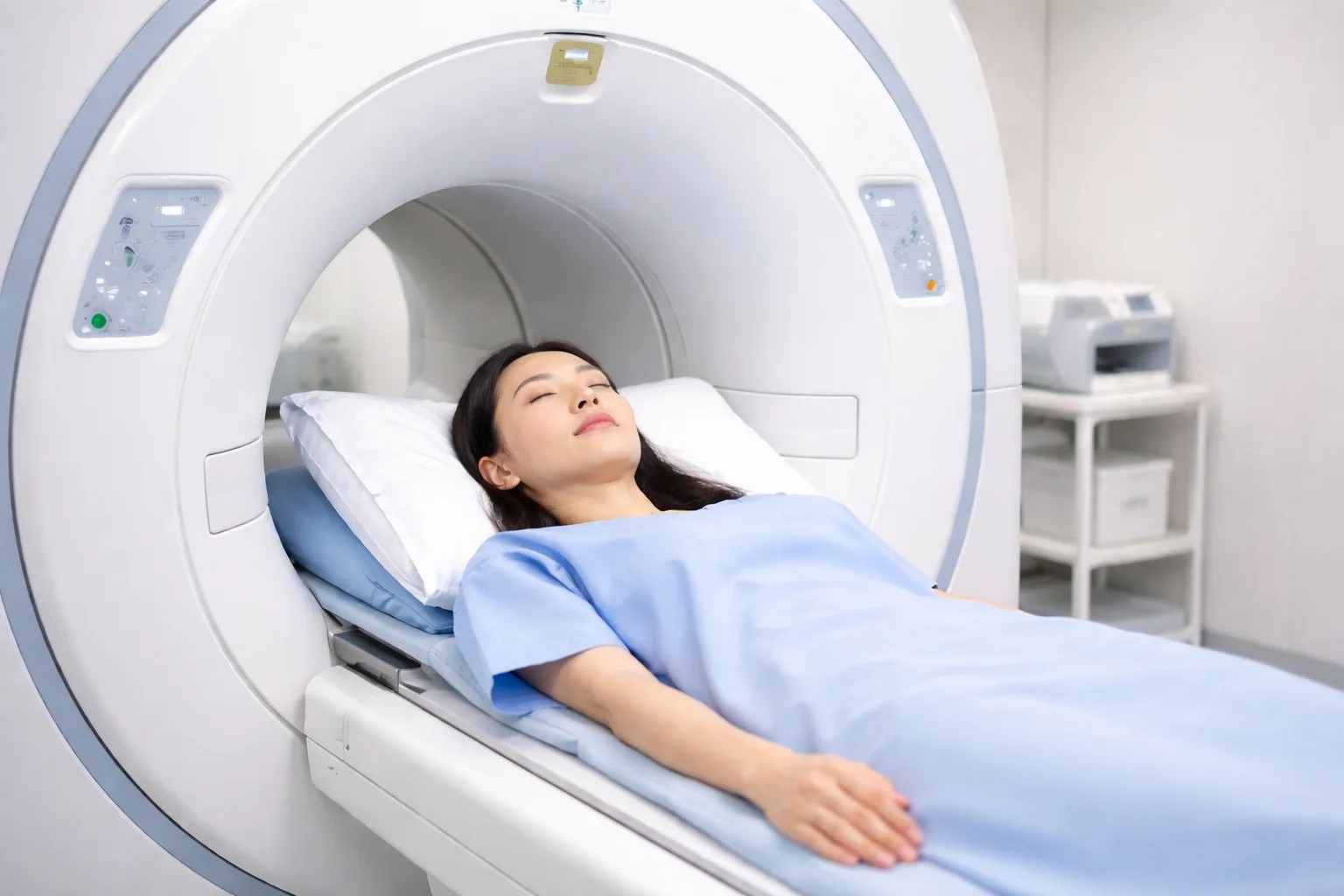
Patient in a hospital gown lying on the table of an MRI scanner during a scan

MRI scans generally require minimal preparation. Our clinic will provide specific instructions after you book your appointment, but here are some general guidelines:

  • Metal implants and devices — Some metal implants, pacemakers, cochlear implants, surgical clips, or intrauterine devices (IUDs) may not be compatible with MRI.
  • Clothing — Wear comfortable, loose-fitting clothing without metal zips, buttons, or fasteners. You may be asked to change into a gown.
  • Jewellery and accessories — Avoid wearing jewellery, watches, hairpins, hearing aids, and removable dental work, as you will be asked to remove all metal items before the scan.
  • Contrast dye — Some scans require a contrast injection. Patients with kidney problems, allergies, or who are pregnant or breastfeeding may not be suitable for contrast.
  • Claustrophobia — If you feel anxious about enclosed spaces, let the clinic know when booking so arrangements can be made.
  • Fasting — Some abdominal MRI scans may require fasting beforehand. Our clinic will inform you if this applies.

What Should I Bring for My MRI Scan?

  1. Identification card or documentation
  2. Referral letter or memo from your doctor (if any)
  3. Previous scan reports or medical records (if available)
  4. A list of any implants, devices, or surgical history involving metal

MRI Scan Side Effects

MRI scans are generally considered a low-risk procedure as they do not use ionising radiation. However, there are some side effects and considerations to be aware of:

If you experience any prolonged or concerning symptoms after your MRI scan, contact your doctor for advice.

Cost of MRI Scan in Singapore

At Singapore Women's Clinic, we offer MRI scans along with other imaging services such as X-rays and ultrasound. Our prices are as follows:

MRI Scan Price*
Brain From $1,122.70
Stroke Screen (includes MRA, COW & Carotids) $1,231.70
Neck / Nasopharynx / Oropharynx / Post Nasal Space $1,504.20
Shoulder (per side) $1,090
Spine From $1,090
Elbow (per side) $1,090
Forearm (per side) $1,090
Wrist (per side) $1,090
Hand (per side) $1,090
Abdomen (Kidney, Liver, Pancreas, Gallbladder & Spleen) $1,613.20
Pelvis From $1,613.20
Prostate $1,613.20
Hip (per side) $1,090
Thigh / Femur (per side) $1,090
Knee (per side) $1,090
Foot (per side) $1,090
Full Body $4,388
All other MRI scans Please enquire

*Prices are NETT and inclusive of GST.

Payment Options We Accept

Credit Card (Visa, Mastercard, AMEX, UnionPay)
NETS / PayNow / GrabPay
Cash
MediSave

All MRI scans are performed at our partner radiology centres. Our clinic coordinates the booking, referral, and follow-up review for you.

Can I Use MediSave to Pay for My MRI Scan?

You may use up to $600 of your MediSave per year for outpatient diagnostic scans, including MRI, provided they are for a diagnostic purpose (e.g. investigating a medical symptom or condition). MediSave cannot be used for screening-purpose MRI scans, such as a full body MRI done as part of a general health check.

If you are unsure whether your scan qualifies, please contact our clinic and we will be happy to advise you.

Is MRI Covered by Insurance?

Most private health insurance plans in Singapore cover MRI scans that are medically necessary and ordered by a doctor, though coverage varies by plan. Some plans may require a referral letter or pre-authorisation, and may only cover inpatient scans.

It is best to check with your insurance provider directly. If you need a referral letter or documentation for your claim, our doctors can assist you.

Where Can I Get an MRI Scan Near Me?

Orchard Clinic

Singapore Women's Clinic at Camden Medical Centre in Orchard

Address

1 Orchard Boulevard, #05-09, Camden Medical Centre, S248649

Parking

Camden Medical Centre Carpark

MRT Access

Orchard Boulevard (TE13): 2-minute walk

Orchard (NS22): 8-minute walk

Opening Hours

Mon - Fri: 8:30 AM – 5:30 PM

Sat: 8:30 AM – 12:30 PM

Sun & PH: Closed

Tanjong Pagar Clinic

Singapore Women's Clinic at Anson House in Tanjong Pagar

Address

72 Anson Rd, #01-02, Anson House, S079911

Parking

Anson House Carpark

MRT Access

Tanjong Pagar (EW15): 4-minute walk

Opening Hours

Mon - Fri: 8:30 AM – 12:30 PM, 1:30 PM – 5:30 PM

Sat: 8:30 AM – 12:30 PM

Sun & PH: Closed

Jurong East Clinic

Singapore Women's Clinic at CPF Jurong Service Centre

Address

21 Jurong Gateway Rd, #02-08, CPF Jurong Service Centre, S608546

  • Enter via the Office Lobby, beside POSB bank
  • Go straight in, take lift to level 2

Parking

Blk 132 Jurong Gateway Rd (Multi-storey Car Park)

MRT Access

Jurong East (EW24 / NS1): Exit D (5-min walk)

Opening Hours

Mon - Fri: 8:30 AM – 12:30 PM, 1:30 PM – 5:30 PM

Sat: 8:30 AM – 12:30 PM

Sun & PH: Closed

Why Choose Our MRI Services?

Convenient, accessible, and caring. Here's what sets us apart.

MOH & MediSave Accredited

Our friendly team will assist with your MediSave claims where applicable for eligible diagnostic MRI scans.

Consultation & Imaging in One Visit

See a doctor and arrange your MRI scan in the same appointment, with no need for separate visits or referrals.

Same-Day Appointment & Friendly Team

Book your MRI consultation on the same day. Our friendly team is here to help you every step of the way.

How Do I Book an MRI Appointment?