Birth Control Pills Singapore
Daily Contraception, Matched to Your Health
Conveniently located in Orchard, Tanjong Pagar, Jurong East & Novena

Medically Reviewed By: Dr Jana Lim, Board-Accredited Family Physician
Board-Accredited Family Physician | MBChB, MMed (FM)
MBChB, MMed (FM) | Last updated:
What Are Birth Control Pills?
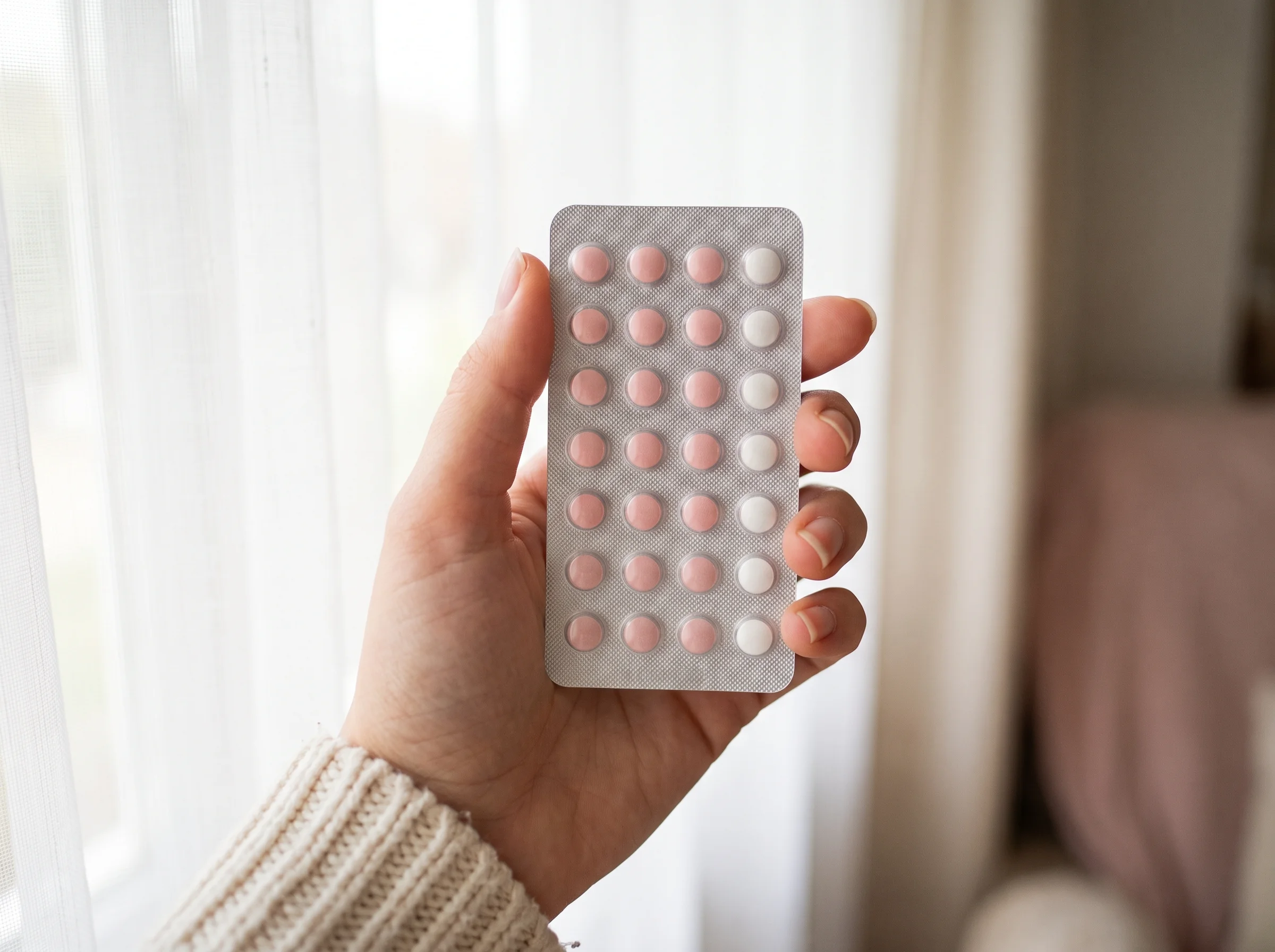
Birth control pills are prescription tablets that you take once a day to prevent pregnancy. They are also called oral contraceptives, or simply "the pill".
The active pills contain artificial versions of the female hormones oestrogen and progesterone. Some types can also ease period cramps and help keep hormone levels steady.
Birth control pills are taken every day as ongoing contraception. The morning-after pill works differently: it is emergency contraception, taken once after unprotected sex. Period delay pills are different again, as they postpone your period for a planned event and do not prevent pregnancy.
How Do Birth Control Pills Work?
Birth control pills work by keeping your hormone levels steady, which prevents pregnancy in three ways:
- Stopping ovulation: The pill keeps your hormone levels steady, which stops the monthly surge of luteinising hormone (LH) and follicle-stimulating hormone (FSH) that releases an egg from the ovary.
- Thickening cervical mucus: The progesterone-like hormone in the pill makes the mucus at the neck of the womb (cervix) thicker. Sperm find it harder to pass through.
- Thinning the womb lining: The lining of the womb (endometrium) normally thickens each month to prepare for pregnancy. On the pill, it stays thin, so a fertilised egg is less likely to attach.
These effects last only while you take the pill. Once you stop, your natural cycle and fertility usually return.
How Effective Are Birth Control Pills?
Birth control pills prevent pregnancy in more than 99 in 100 people a year with perfect use, where every pill is taken on time.
With typical use, about 7 in 100 people get pregnant in a year. Typical use reflects everyday life, where a pill may be missed, a new pack started late, or a dose lost through vomiting.
Taking your pill at the same time every day keeps your protection close to the perfect-use figure. You do not need to use withdrawal (pulling out) as well.
What Are the Types of Birth Control Pills?
Combined Pills
Combined pills contain two hormones, oestrogen and progestogen (an artificial form of progesterone). The two hormones work together to stop ovulation, thicken cervical mucus and keep the womb lining thin.
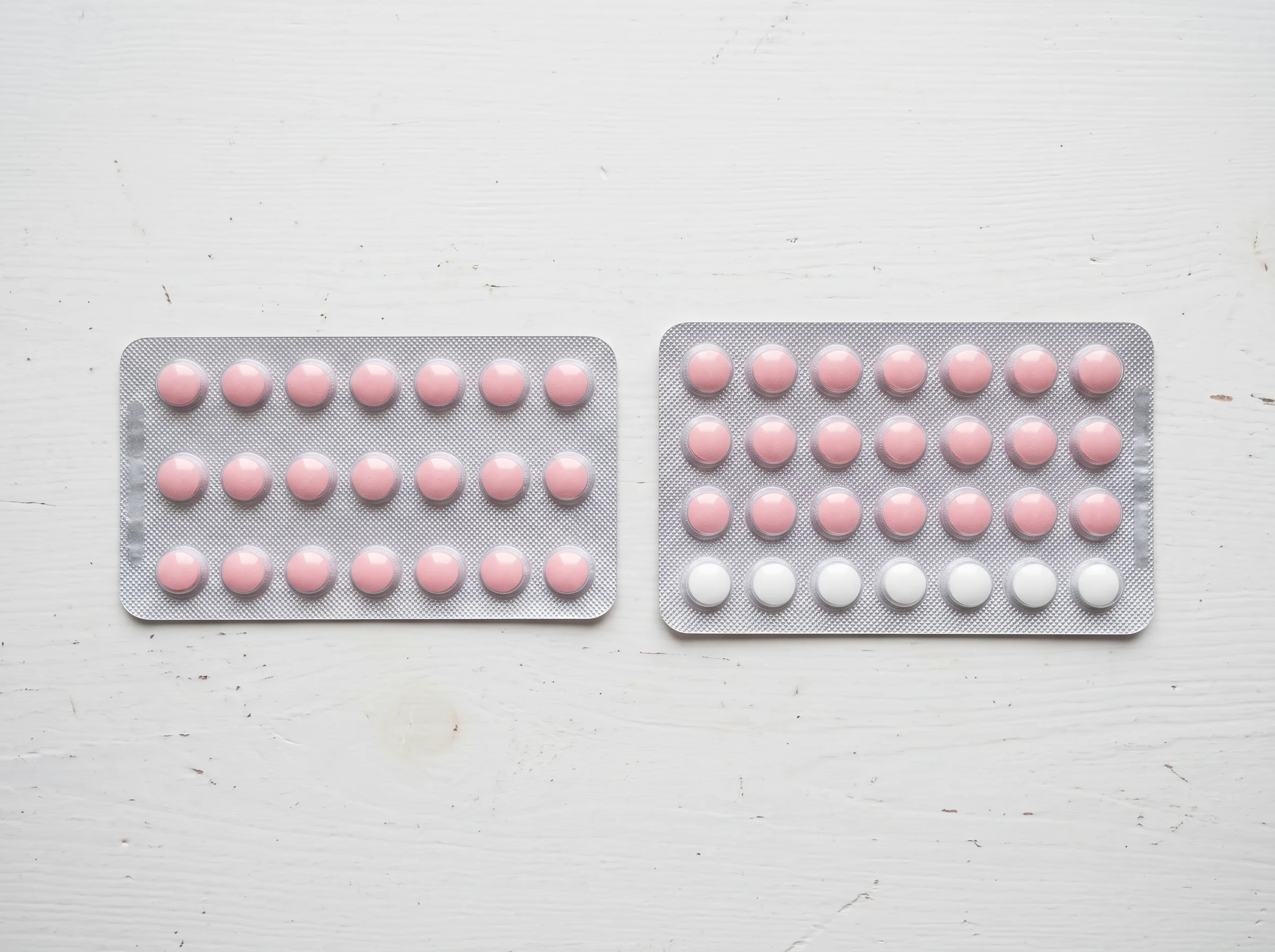
Combined pills usually come in 21-day or 28-day packs:
- 21-day pack: Every pill contains hormones. After the last pill, you take a 7-day break, and bleeding happens during this break.
- 28-day pack: The first 21 or 24 pills contain hormones. The remaining pills are placebo pills (pills with no hormones), and a bleed similar to a period happens while you take them.
Other Benefits & Uses of Birth Control Pills
The benefits of birth control pills go beyond preventing pregnancy, as the pill is also prescribed to manage several period and hormone problems:
- Periods — more regular periods, milder cramps (dysmenorrhoea) and lighter bleeding (menorrhagia)
- Premenstrual symptoms — may ease premenstrual syndrome (PMS) and its more severe form, premenstrual dysphoric disorder (PMDD)
- Acne — pills containing drospirenone or cyproterone acetate lower the male-type hormones (androgens) that make skin oily
- Polycystic ovary syndrome (PCOS) — may improve irregular periods, acne and excess hair growth
- Endometriosis — may ease pelvic pain from tissue like the womb lining growing outside the womb
- Hormonal migraines — taking the pill continuously may reduce migraines triggered around a period
These uses depend on the type of pill and your health.
What Are the Side Effects of Birth Control Pills?
Birth control pills are generally well tolerated, but some people get side effects as their body adjusts to the hormones.
Common side effects of birth control pills may include:
- Nausea or headaches, linked to changes in oestrogen levels
- Breast tenderness, from hormone changes and fluid retention
- Mood changes, as the hormones can affect brain chemicals such as serotonin that help control mood
- Spotting or breakthrough bleeding (light bleeding between periods), most often in the first few months
These side effects often ease within the first few months of taking the pill.
Long-Term Risks of Birth Control Pills
Long-term use of birth control pills may increase the risk of blood clots in the veins (venous thromboembolism, or VTE), high blood pressure, stroke and heart attack (myocardial infarction).
These risks are higher if you smoke or already have high blood pressure, heart disease or a history of blood clots.
Disclaimer: This is not a complete list of side effects. The information here does not replace professional medical advice, so ask a doctor about your concerns before you start a new medicine.
Who Should Not Take Birth Control Pills?
Birth control pills may not be suitable for everyone, and some people need to avoid them or use another form of contraception.
This includes people who:
- Are pregnant
- Smoke
- Have high blood pressure
- Have had a blood clot, a stroke or a heart attack
- Have heart disease (cardiovascular disease)
Whether the pill suits you depends on your full medical history.
Starting the pill or switching from another one? Book a consultation or teleconsultation, and our doctors can prescribe your pill and show you how to take it.
WhatsApp Us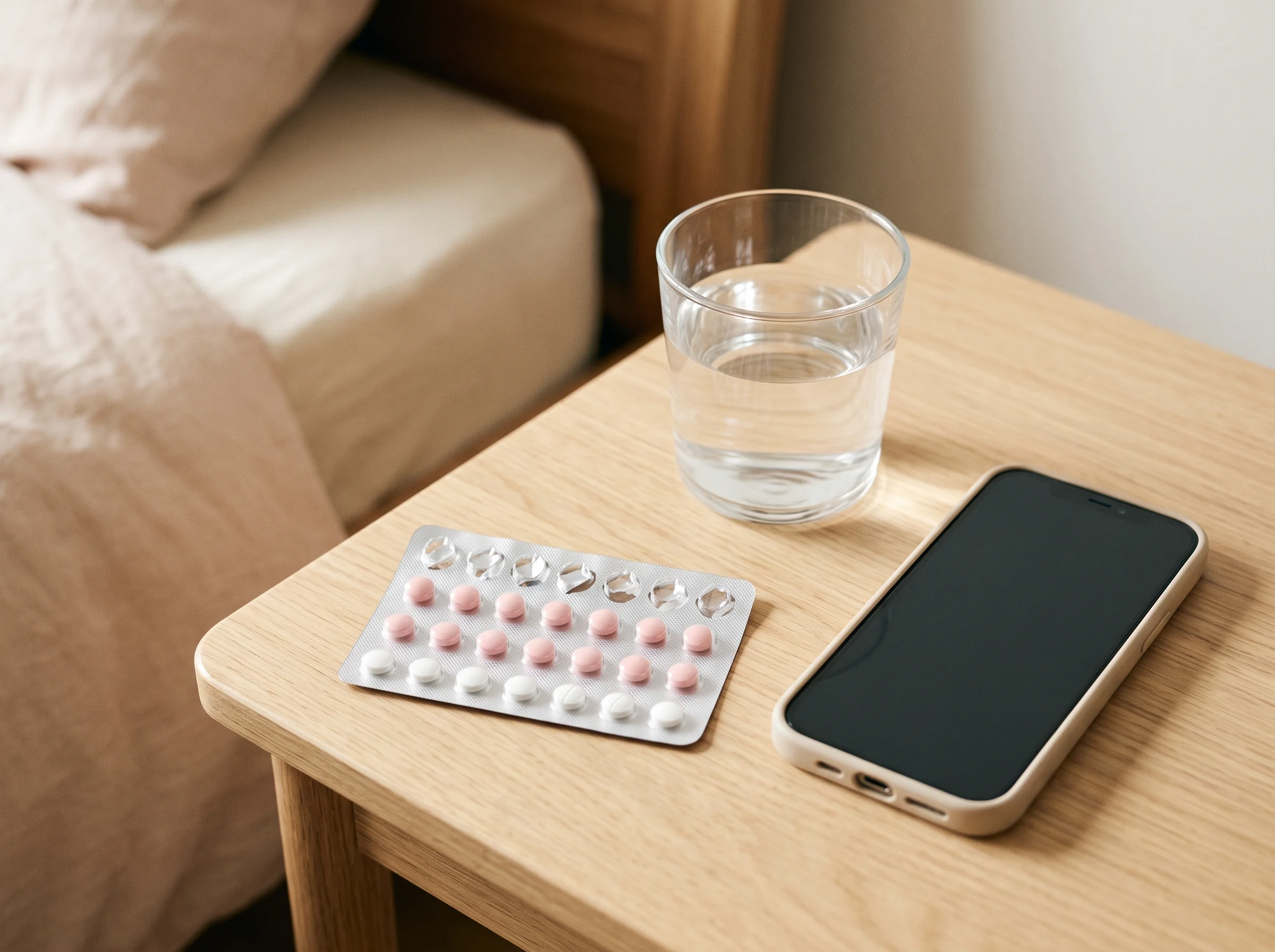
How to Take Birth Control Pills
To get full protection from birth control pills, take one pill at the same time every day. You can take it with or without food, so pick a time that fits your daily routine.
21-Day and 28-Day Packs
For a 21-day pack:
- Take one pill every day for 21 days.
- Stop for 7 days. A withdrawal bleed (a bleed similar to a period) usually happens during this break.
- Start your next pack on day 8, even if you are still bleeding.
For a 28-day pack:
- Take one pill every day for 28 days, with no break.
- The last 4 to 7 pills are placebo pills, and a withdrawal bleed usually happens while you take them.
- Start your next pack the day after you finish the last one.
When to Start Birth Control Pills and When They Start Working
Combined birth control pills protect you from the first pill if you start on the first day of your period. If you start more than 5 days after your period begins, use extra contraception, such as condoms, for the first 7 days.
If you are moving to the pill from another method, such as an injection, implant or patch, the start date depends on the method you are leaving, so that you stay protected.
What Happens If You Miss a Birth Control Pill?
Missing a birth control pill can lower your protection against pregnancy, especially if you are more than 12 hours late or miss more than one pill. The steps below apply to combined pills.
Less Than 12 Hours Late
- Take the missed pill as soon as you remember.
- Take your next pill at the usual time, even if this means taking two pills in one day.
- You do not need extra contraception.
More Than 12 Hours Late
If more than 12 hours have passed since your pill was due, what you do depends on which week of the pack you are in:
| Week | What to do |
|---|---|
| Week 1 |
|
| Week 2 |
|
| Week 3 |
|
Vomiting or severe diarrhoea within 3 to 4 hours of taking a pill can stop the hormones from being absorbed. In that case, treat it as a missed pill and follow the steps above.
If you are unsure what to do, check the leaflet that comes with your pills or ask your doctor.
Birth Control Pills and Your Period
On birth control pills, your period usually comes during the placebo pills or the 7-day break, and it is called a withdrawal bleed. It happens because the hormone level drops when you stop the active pills.
A withdrawal bleed is often lighter and shorter than a normal period, because the pill keeps the womb lining thin. With continuous or extended-cycle use, where you take active pills for longer without a break, you may bleed only every three months or not at all.
Spotting or light bleeding between periods is common in the first few months on the pill, while your body adjusts.
Taking active pills back to back, without the placebo pills or break, can also delay or stop a period. For a one-off delay, such as a holiday, period delay pills are often more suitable.
What Happens When You Stop Taking Birth Control Pills?
After you stop taking birth control pills, your natural hormone cycle starts again, and ovulation can return within a few weeks. This means you can get pregnant soon after stopping, so start another form of contraception straight away if you do not plan to conceive.
Your periods may take longer to settle. Some people have irregular or delayed periods for a short time after stopping.
Fertility usually returns quickly, but this varies with your age and any menstrual conditions you had before the pill. If your period has not returned within three months of stopping, see a doctor to check for other causes.
"Taken every day as prescribed, the pill helps prevent pregnancy until you are ready. When your plans change, you can stop, and your fertility usually returns soon after."
Dr Jana Lim
What Is the Cost of Birth Control Pills in Singapore?
At Singapore Women's Clinic, we offer birth control pills, morning-after pills, period delay pills and hormone tests, with consultation at our clinics or by teleconsultation.
Our prices are as follows:
| Treatment / Test | Price* |
|---|---|
| Consultation | From $49.05 |
| Teleconsultation | From $38.15 |
| Medication | |
| Birth Control Pill (Yaz®) | $43.60 (per box of 40 tablets) |
| Emergency Contraceptive Pill (Ella®) | $43.60 |
| Period Delay Pill (Norethisterone 5 mg) | $0.76 per tab |
| Hormone Tests | |
|
Amenorrhoea (Hormone) Profile 3
Testosterone, Estradiol (E2), Free T4, Thyroid Stimulating Hormone (TSH), Follicle Stimulating Hormone (FSH), Luteinising Hormone (LH), Prolactin Recommended for irregular menstrual bleeding, and done between days 2 and 5 of the menstrual cycle.
Testosterone, Estradiol (E2), Free T4, Thyroid Stimulating Hormone (TSH), Follicle Stimulating Hormone (FSH), Luteinising Hormone (LH), Prolactin. Recommended for irregular menstrual bleeding, and done between days 2 and 5 of the menstrual cycle.
|
$130.80 |
|
Female Acne / Weight Gain Screen**
Testosterone, Estradiol, Progesterone, TSH, Cortisol, FSH, LH, Prolactin, Dehydroepiandrosterone Sulfate (DHEAS), Sex Hormone Binding Globulin (SHBG) Recommended for suspected hormonal acne, and done between days 2 and 5 of the menstrual cycle.
Testosterone, Estradiol, Progesterone, TSH, Cortisol, FSH, LH, Prolactin, Dehydroepiandrosterone Sulfate (DHEAS), Sex Hormone Binding Globulin (SHBG). Recommended for suspected hormonal acne, and done between days 2 and 5 of the menstrual cycle.
|
$218 |
|
Hormonal Study
DHEAS, Insulin-like Growth Factor 1 (IGF-1), SHBG, FSH, LH, E2
DHEAS, Insulin-like Growth Factor 1 (IGF-1), SHBG, FSH, LH, E2
|
$196.20 |
| Ultrasound | |
| Ultrasound Pelvis (Transabdominal / Transvaginal) | $272.50 |
*All prices are NETT and inclusive of GST.
**Test must be done between 8:30 AM and 10:00 AM for accuracy.
Payment Options We Accept


At Singapore Women's Clinic, we also provide pap smears and STD tests, which you can arrange at the same visit as your birth control consultation.