DEXA Scan in Singapore
Detailed Measurements, Clearer Bone Health
Conveniently located in Orchard, Tanjong Pagar, Jurong East & Novena

Medically Reviewed By: Dr Jana Lim, Board-Accredited Family Physician
Board-Accredited Family Physician | MBChB, MMed (FM)
MBChB, MMed (FM) | Last updated:
What Is a DEXA Scan?
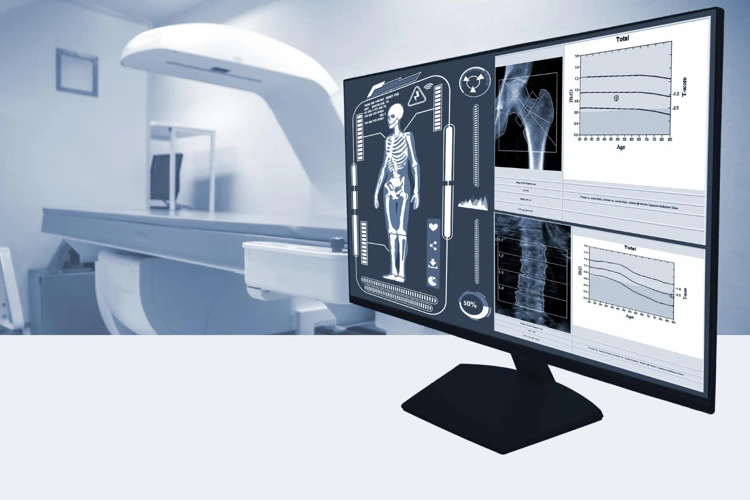
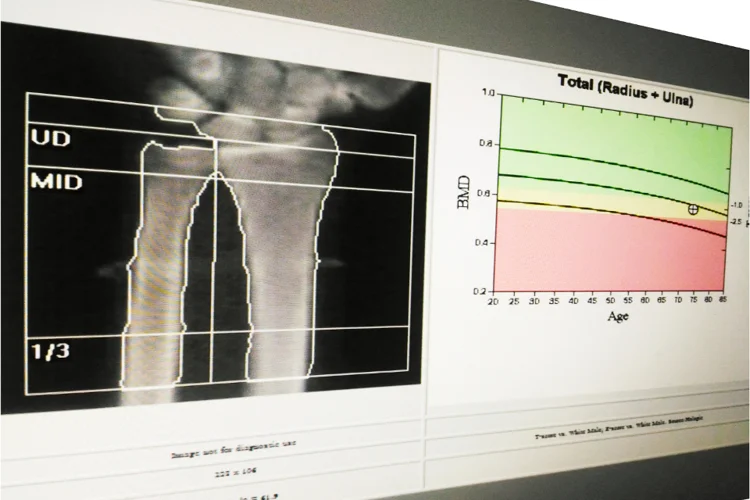
A DEXA (dual-energy X-ray absorptiometry) scan, also known as a DXA or bone densitometry scan, is a non-invasive imaging test that measures your bone mineral density (BMD), the amount of mineral in your bones.
It can also measure body composition, meaning the amounts of fat, lean muscle and bone that make up your body weight, reported separately for your arms, legs and trunk.
How Does a DEXA Scan Work?
A DEXA scan works by passing two X-ray beams of different energy levels through the body, which lets the scanner separate bone from soft tissue and measure the bone on its own.
The lower your bone mineral density, the weaker the bone and the more likely it is to fracture. Readings are typically taken at the hip and lower spine, where fractures from weakened bone most commonly occur.
No injection or contrast dye is involved, and the radiation dose is less than a tenth of a standard chest X-ray.
Bone Densitometry vs Body Composition
Bone densitometry and body composition scans are performed using the same machine, but they serve different purposes. A body composition scan cannot tell you whether you have osteoporosis, and a bone densitometry scan will not tell you your body fat percentage.
| Scan | Description & Purpose |
|---|---|
| DEXA Bone Densitometry (Hip & Spine) |
Measures bone density at the places where weakened bone most often breaks. It is typically used to:
|
| DEXA Body Composition (Full Body, with VAT) |
Splits your body weight into fat, muscle and bone, region by region. It also estimates visceral
adipose tissue (VAT), the fat stored deep around your abdominal organs. It is typically used to:
|
Who Should Consider a DEXA Scan?
A DEXA scan is usually recommended when an osteoporosis risk assessment shows you are likely to
have significant bone loss. Bone loss has no symptoms, so most people only find out when a bone
breaks.
Osteoporosis risk assessment is recommended:
- From age 50 for women, or from menopause if that comes earlier
- From age 65 for men
- Every 5 years
A scan is more likely to be recommended if you have any of the following:
- Menopause before age 45, or periods stopping for more than a year beforehand
- A parent or sibling diagnosed with osteoporosis, or a parent who fractured a hip
- Diabetes, an overactive thyroid, rheumatoid arthritis, or long-term kidney or liver disease
- Frailty, loss of muscle mass, or long periods of immobility
- Long-term use of certain medications that affect bone
- Low body weight or a small, light frame
- A shortfall in bone-building nutrients such as calcium and vitamin D
- Smoking, heavy alcohol intake, or a largely inactive lifestyle
No age guideline applies to body composition scans. People usually book one to get a starting point before changing their training or diet, or to check that the weight they are losing is fat rather than muscle.
Bone Loss After Menopause
Oestrogen helps keep bone strong throughout adult life. Bone breaks down faster than the body can rebuild it once oestrogen levels fall during menopause. Density can drop noticeably within about ten years, most often at the hip, spine and wrist.
An early menopause (periods stopping before the age of 45) may be a reason to test sooner, whether it happened naturally or after surgery to remove the ovaries (oophorectomy). Bone density is worth knowing at this stage because it can still be acted on, through calcium and vitamin D, weight-bearing and resistance exercise, and where appropriate, medication or menopausal hormone therapy.
What Happens During a DEXA Scan?
A DEXA scan is a painless procedure, and you stay awake and fully clothed throughout. Here is what you can typically expect:
- You will need to remove any metal you are wearing, such as jewellery, belts, coins and hairpins. Most people keep their own clothes on, though you may be given a gown if your outfit has zips or studs.
- You will lie face up on a padded table. A cushioned block may be placed under your lower legs to flatten the curve of your spine, or your foot may be positioned in a brace to hold the hip steady.
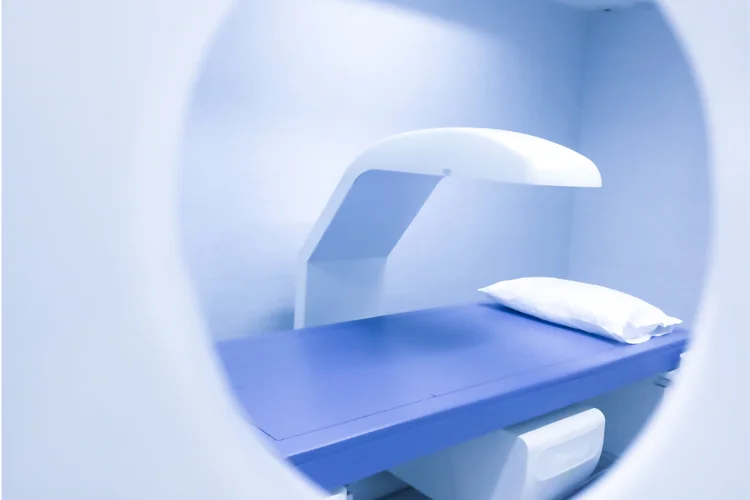
- A scanning arm will pass slowly above you without touching you, covering the lower spine and one hip, or the whole body for a body composition scan. Unlike an MRI or CT scan, there is no tunnel to go into.
- You will need to stay still and breathe normally while each region is scanned, which takes only a minute or two.
How Do I Prepare for a DEXA Scan?
You do not need to fast, so eat and drink as normal on the day. The following can affect the accuracy of the reading:
- You will usually be asked to stop calcium supplements for at least 24 hours beforehand. Calcium still passing through your gut lies in the path of the scan and can make bone density appear higher than it is.
- Wear loose clothing with no metal zips, buttons, belts or underwiring.
- Inform your doctor if you are pregnant or think you may be, or if you have recently had a barium test or a CT scan with contrast dye.
Check with your doctor before your appointment, and before stopping any supplement or medication you take regularly, as preparation can vary depending on your medical history and the type of scan being done.
What Should I Bring for My DEXA Scan?
- Identification card or documentation
- Referral letter or memo from your doctor (if any)
- Previous DEXA scan or bone density reports for comparison (if available)
- A list of any supplements or medications you are taking
How to Read Your DEXA Scan Results
Your DEXA scan report shows different figures depending on which scan you had. A bone densitometry report gives your bone mineral density at each site scanned, along with two scores: a T-score and a Z-score. A body composition report gives measurements in kilograms rather than scores.
T-Score
The T-score compares your bone density against the average for a healthy adult in their mid to late twenties, when bone density is at its highest. This is the score used to diagnose osteoporosis.
| T-Score | What It Means |
|---|---|
| −1.0 or above | Normal bone density. Routine bone health measures apply, with repeat testing guided by your risk factors. |
| Below −1.0 to above −2.5 | Osteopenia, meaning bone density is lower than ideal but has not reached the threshold for osteoporosis. This is the stage where diet, exercise and risk-factor changes make the most difference. |
| −2.5 or below | Osteoporosis. Fracture risk is raised, and your doctor will discuss the treatment options most suitable for your situation alongside measures to prevent falls. |
Z-Score
The Z-score compares your bone density against the average for people of your own age, sex and body size.
It is more useful for assessing bone density in children and younger adults, whose bones are still building.
A result well below average for your age group suggests a cause other than ageing, such as a medical
condition or a medication affecting bone. That normally leads to follow-up tests to identify the cause.
Body Composition Results
A body composition report lists your fat, muscle and bone both in total and region by region, along with your body fat percentage and a figure for visceral fat. There is no normal range for these numbers, so they are most useful for tracking change between scans.
Is a DEXA Scan Accurate?
A DEXA scan is widely considered the most reliable way to measure bone density, and it is usually precise enough to detect small changes between scans. Repeat scans are usually done on the same machine where possible, since readings can vary slightly between machines.
Factors such as arthritis in the spine, past spinal surgery, healed fractures and calcium deposits in the
aorta can add extra density that is not bone, which may make your bone density appear higher than it actually is and hide bone loss. The hip is usually scanned alongside the spine for this reason.
Metal in clothing and recent contrast
dye can also distort the image, and for body composition, hydration and whether you have just eaten may
shift the numbers slightly.
Your doctor will usually take any of these into account when interpreting your scan.
How Often Should a DEXA Scan Be Repeated?
The interval between DEXA scans depends on your results and your risk, not on a fixed schedule. Bone changes slowly, so scanning too often picks up small differences from the scan itself rather than real change in your bones.
If you are on treatment for osteoporosis, repeat scans are generally advised every one to two years, and sooner if bone is being lost quickly. If you are not on treatment, the frequency depends on your fracture risk, and scans are usually spaced further apart when that risk is low. Your doctor may also recommend an earlier scan after a new fragility fracture, a medication known to affect bone, or a new diagnosis affecting bone strength.
For body composition, scans are commonly repeated every three to six months, because fat and muscle respond to training and diet far faster than bone does.
Cost of a DEXA Scan in Singapore
At Singapore Women's Clinic, we offer DEXA bone densitometry and body composition scans, along with the blood tests that help explain a low reading. Our prices are as follows:
| Test | Price* |
|---|---|
| Consultation (for patients without a valid referral letter) | From $49.05 |
| Teleconsultation (for reviewing of results) | $38.15 |
| Bone Mineral Densitometry | |
| DEXA Bone Densitometry (Hip & Spine) | $141.70 |
| Ultrasound Heel (Bone Mass Density) | $43.60 |
| DEXA Body Composition | |
| DEXA Body Composition | $207.10 |
| DEXA Body Composition with Visceral Adipose Tissue (VAT) | $308.47 |
| Related Blood Tests | |
| Vitamin D Deficiency Test | $130.80 |
| Deficiency Screen (Folate, Vitamin B12, Vitamin D, Iron, Total Iron Binding Capacity, % Iron Saturation, Ferritin) | $161.32 |
| Total Testosterone | $38.15 |
| Free Testosterone | $147.15 |
| Men & Women Wellness (Full Body Screening) Note: fasting of 8 hours is required for your blood test |
From $152 |
*Prices are NETT and inclusive of GST.
Payment Options We Accept


For a more comprehensive review of your health, consider our health screening packages, as some include the Ultrasound Heel (Bone Mass Density) test.
Can I Use MediSave to Pay for a DEXA Scan?
A DEXA scan is MediSave claimable in specific circumstances. Osteoporosis is one of the
chronic conditions covered by the Chronic Disease Management Programme (CDMP), and MediSave can be used for
investigations that evaluate an approved chronic condition. This falls under the
MediSave500/700 scheme, which allows up to $500 a year, or
$700 a year for complex chronic conditions, with a 15% cash co-payment that is waived at your enrolled
Healthier SG clinic.
Contact us for more information.
A DEXA scan done as a general check is not claimable. Your own insurance plan may also cover the scan if it
was ordered to investigate a symptom rather than as a general check, so please confirm this with your
insurer directly.
Why Choose Our DEXA Scan Services?
MOH-Registered Clinic
Our clinic is registered with the Ministry of Health (MOH) and meets regulatory standards for diagnostic imaging services.
Referral & Follow-Up Arranged
We arrange your DEXA scan at our partner radiology clinic and review the report with you afterwards.
Same-Day Appointment
Book your DEXA scan consultation on the same day. Our friendly team is here to help you every step of the way.
Where to Get a DEXA Scan Near Me
Do note that DEXA Bone Densitometry (Hip & Spine) and DEXA Body Composition scans are carried out at our partner radiology clinic in Orchard (Shaw House).