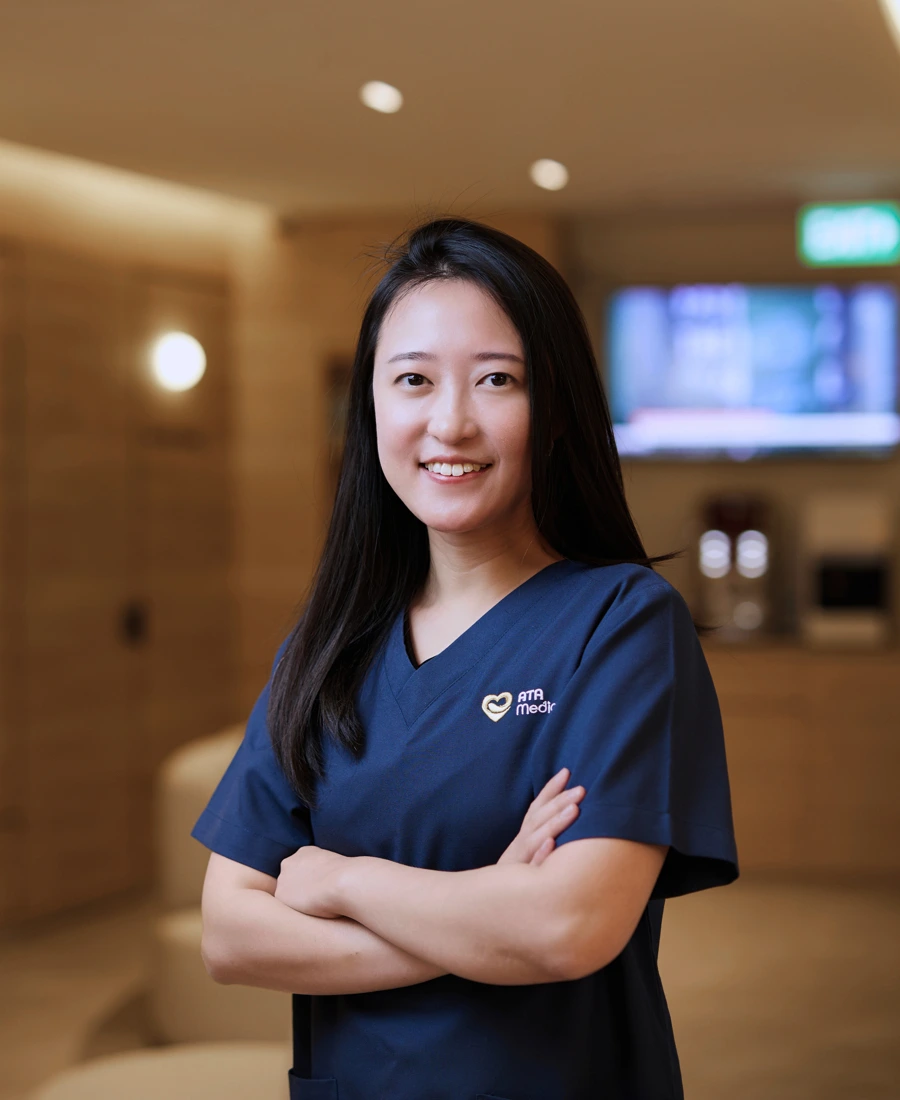
Dr Jana Lim | MBChB, MMed (FM) | Board-Accredited Family Physician
Last updated: 2026-08-16About This Data
These statistics represent the latest peer-reviewed research on women's health in Singapore. All data is sourced from medical journals indexed in PubMed, the Ministry of Health Singapore, and international health organisations. Each statistic includes full citation information and can be copied with proper attribution for use in media articles, research papers, or educational materials.


Citation: Each statistic has two buttons - click "Copy" for quick text with source attribution, or "Cite (APA)" for full academic citations.
Life Expectancy & General Health
Life expectancy for women in Singapore is 87.6 years, the highest globally.
Singaporean women enjoy the longest life expectancy in the world, reflecting the country's developed healthcare system, high standard of living, and effective public health policies.
Health-adjusted life expectancy for Singaporean women is 75.8 years.
This measures years lived in good health, accounting for time lived with illness or disability. Singapore's figure indicates not just longevity, but quality of life throughout those years.
The probability of dying from non-communicable diseases between ages 30 and 70 is 10.1% for women.
Non-communicable diseases (NCD) such as diabetes, cardiovascular disease, and cancer remain significant health challenges in Singapore despite its developed healthcare infrastructure because of rapid population ageing, rising prevalence of NCDs, and limitations in primary care capacity and integration.
Cancer Screening & Incidence
Breast cancer is the most common cancer among Singaporean women, with an age-standardised incidence rate of 72.61 per 100,000.
Breast cancer accounts for approximately 1 in 3 of all cancers diagnosed in women in Singapore, making regular mammogram screening critical for early detection.
Related Service
Early detection saves lives. Our clinic offers breast cancer screening services.
Contact us for screening optionsOnly 45.5% of women aged ≥40 report regular mammogram screening.
Despite breast cancer being the #1 cancer affecting Singaporean women, less than half of eligible women undergo regular screening. This represents a significant gap in preventive healthcare.
Take Action
Are you due for your mammogram? We offer convenient screening at both our locations.
Book your screening todayCervical cancer screening participation is low, with only 30% of eligible women reporting screening.
Despite cervical cancer being highly preventable through regular Pap smears and HPV testing, participation rates in Singapore remain concerningly low.
Prevention Matters
Cervical cancer screening and HPV vaccination can prevent most cases. Get screened today.
Learn about cervical screeningSince 1968, Singapore has experienced an approximate 47.9% drop in the incidence of invasive cervical cancer, attributed to the implementation of Pap screening programmes.
The reduction in cervical cancer rates in Singapore's organised screening
programmes was calculated by comparing age-standardised incidence rates (ASR) of
invasive cervical cancer over time, using data from the Singapore Cancer
Registry. The ASR declined from 24.34 per
100,000 females in
1968–1972 to 12.68 per 100,000 in 2008–2012, representing a decrease of
approximately
47.9%.
Calculation:
Percentage decrease =
(ASR1968-1972 − ASR2008-2012)
ASR1968-1972
× 100
Percentage decrease =
(24.34 − 12.68)
24.34
× 100 = 47.9%
The reduction in cervical cancer rates in Singapore is attributed to the
implementation of Pap screening programmes, which have led to consistently
decreasing incidence over time.
HPV Vaccination
HPV vaccination combined with screening provides the best protection against cervical cancer.
Learn about HPV vaccinationWomen with lower household income, less knowledge, and less engagement in other health screenings are less likely to undergo mammograms.
Socioeconomic and educational factors create disparities in screening rates, suggesting targeted interventions are needed to improve equity in preventive healthcare access.
Reproductive & Sexual Health
Menopausal symptoms are highly prevalent, with 62.6% of midlife women reporting at least one moderate to severe symptom.
Nearly two-thirds of women experience significant menopausal symptoms that impact quality of life, yet many do not seek treatment or support.
Joint and muscle discomfort, sleep problems, vaginal dryness, exhaustion, and hot flushes are the top five menopausal symptoms reported.
These symptoms significantly impact daily functioning and quality of life for menopausal women, highlighting the need for comprehensive support and treatment options.
Sexual dysfunction affects 70.3% of sexually active midlife women.
Sexual health issues are remarkably common among midlife women but remain under-discussed and undertreated due to cultural stigma and lack of awareness.
Confidential Support
Sexual health is an important part of overall wellbeing. We offer confidential consultations in a judgement-free environment.
Explore our sexual health servicesAbout 43.2% of women in midlife do not have sex, and this is more common in women who are older, started having periods at a younger age, have less education, have lower income, are not married, have never had children, or are underweight (with body mass index less than 18.5 kg/m²).
Nearly half of midlife women report being sexually inactive, often due to physical symptoms, relationship factors, or lack of desire—issues that can be addressed with proper medical support.
Urinary incontinence affects 41.74% of female outpatients, but only 41% seek medical attention.
Most women who experience urinary incontinence in outpatient settings in
Singapore have mild symptoms, and the most frequent form is stress urinary
incontinence, which means urine leaks during activities like coughing, sneezing,
or exercising. Older age, having given birth vaginally, and being sexually
active are all linked to a greater likelihood of experiencing urinary
incontinence.
Despite being highly prevalent, most women with urinary
incontinence do not seek help,
often due to embarrassment or the misconception that it's a normal part of
ageing.
Risk Factors & Chronic Disease
Obesity (BMI ≥27) is associated with a more than twofold increased risk of endometrial cancer among Singapore Chinese women.
Weight management is not just about appearance—it's a critical factor in cancer prevention, particularly for hormone-related cancers like endometrial cancer.
Weight Management
Medical weight loss programmes can reduce cancer risk and improve overall health. We offer evidence-based treatments including GLP-1 medications.
Explore weight loss optionsOnly 32.7% of working women in Singapore achieved a health-enhancing level of physical activity two years into the COVID-19 pandemic, while 44.7% reported sitting for seven or more hours daily.
Women working from home and those living with family were less likely to achieve a health-enhancing level of physical activity, and together with prolonged sitting time, this may contribute to increased risk of chronic diseases, poorer physical health, and reduced overall well-being.
Media Inquiries
For interviews, expert commentary, or additional data about women's health statistics, please contact our medical team.
We typically respond within 24 hours on business days.
Citation Guidelines
When citing statistics from this page, please use:
Singapore Women's Clinic. (2026). Women's Health Statistics Singapore 2026. Retrieved October 7, 2026, from https://www.singaporewomensclinic.com.sg
References
- Tan CC, Lam CSP, Matchar DB, Zee YK, Wong JEL. Singapore's Health-Care System: Key Features, Challenges, and Shifts. Lancet (London, England). 2021;398(10305):1091-1104. doi:10.1016/S0140-6736(21)00252-X
- Dee EC, Laversanne M, Bhoo-Pathy N, et al. Cancer Incidence and Mortality Estimates in 2022 in Southeast Asia: A Comparative Analysis. The Lancet Oncology. 2025;26(4):516-528. doi:10.1016/S1470-2045(25)00017-8
- Huang Q, Tan LY. Exploring Factors Influencing Cervical Cancer Screening Participation Among Singaporean Women: A Social Ecological Approach. Cancers. 2024;16(20):3475. doi:10.3390/cancers16203475
- Chow KY, Tan WP, Tan MH, et al. Incidence, Trends and Ethnic Differences of Oropharyngeal, Anal and Cervical Cancers: Singapore, 1968-2012. PLoS One. 2015;10(12):e0146185. doi:10.1371/journal.pone.0146185
- Logan S, Wong BWX, Tan JHI, Kramer MS, Yong EL. Menopausal Symptoms in Midlife Singaporean Women: Prevalence Rates and Associated Factors From the Integrated Women's Health Programme (IWHP). Maturitas. 2023;178:107853. doi:10.1016/j.maturitas.2023.107853
- Logan S, Thu WPP, Ho K, et al. Sexual Inactivity and Sexual Dysfunction in Midlife Singaporean Women: A Prospective Cross-Sectional Study of Prevalence and Risk Factors. Maturitas. 2021;152:1-9. doi:10.1016/j.maturitas.2021.07.002
- Luo R, Dai W, Tay LH, Ng FC, Koh LT. Urinary Incontinence in Female Outpatients in Singapore. International Urogynecology Journal. 2018;29(4):579-584. doi:10.1007/s00192-017-3488-z
- Lei M, Adambekov S, Edwards RP, et al. Endometrial Cancer Risk Factors in Singapore Chinese: A Prospective Cohort Study. Annals of Epidemiology. 2022;71:9-14. doi:10.1016/j.annepidem.2022.04.002
- Lim E, Ramachandran HJ, Er JBT, et al. The Predictors of Health-Enhancing Physical Activity Among Working Women in Singapore Two Years Into COVID-19: A Cross-Sectional Study. Scientific Reports. 2022;12(1):21493. doi:10.1038/s41598-022-26022-3